
Long COVID: symptoms, PEM, diagnosis and daily life
Understand Long COVID and post-COVID: fatigue, brain fog, reduced capacity, PEM, POTS, diagnosis, treatment and overlap with ME/CFS.
Long COVID in brief
Long COVID describes persistent or new health problems after COVID-19; definitions vary by health system and time frame.
Common symptoms include fatigue and reduced capacity, brain fog, sleep problems, pain, breathlessness and autonomic complaints.
Some people develop PEM, POTS or an illness pattern that meets criteria for ME/CFS, but these are not present in every Long COVID case.
There is no single diagnostic blood test or one treatment that fits every Long COVID phenotype; care is symptom- and finding-specific.
Long COVID is not one uniform condition. After SARS-CoV-2 infection, symptoms can persist, recur or appear later across different organ systems. Fatigue, reduced capacity, brain fog, sleep problems, breathlessness and pain are commonly reported. A key distinction is whether exertion is merely tiring or triggers delayed, prolonged worsening consistent with post-exertional malaise (PEM).
Key points
Long COVID is heterogeneous rather than a single symptom pattern
fatigue, brain fog and reduced exertion tolerance are common
PEM and orthostatic intolerance can be important in a subset of people
Long COVID can overlap with ME/CFS without being identical to it
activity plans need to account for whether PEM is present
Editorial responsibility
Elara Health
Patient-centered health information
Last updated
September 18, 2026
What is Long COVID?
Long COVID is an umbrella term for health problems that continue or emerge after acute COVID-19. Different health systems use somewhat different timing definitions, but the common idea is persistent or recurrent symptoms that cannot be better explained by another condition.
Because Long COVID can affect several organ systems, a useful assessment focuses on the actual symptom pattern and loss of function rather than assuming that every person has the same disease mechanism.
Common Long COVID symptoms
Fatigue and reduced physical or cognitive capacity are common. People also report problems with concentration and memory, unrefreshing sleep, breathlessness, cough, headaches, muscle or joint pain and altered smell or taste.
Palpitations, dizziness or symptoms that worsen while upright can point toward orthostatic intolerance or POTS and may need targeted cardiovascular or autonomic assessment.
PEM and crashes after exertion
Some people experience disproportionate worsening after physical, cognitive or emotional exertion. This post-exertional malaise can be delayed and may last much longer than the activity that triggered it.
When PEM is present, care needs to avoid automatic graded increases in activity. Pacing and individualized energy management are used to reduce overexertion and to better match activity with current capacity.
Long COVID, ME/CFS and POTS
A subset of people with Long COVID develop an illness pattern that meets ME/CFS criteria, especially when sustained loss of function and PEM are central. Other people have different Long COVID phenotypes without ME/CFS.
POTS can also occur after COVID-19. It is a separate diagnosis defined by orthostatic symptoms and an excessive heart-rate rise while upright, after relevant alternatives are excluded.
Diagnosis and treatment
There is no single laboratory test that confirms Long COVID. Assessment is based on history, examination, symptom pattern, functional impact and targeted testing to evaluate alternative or additional causes.
Treatment is individualized to symptoms and findings. Rehabilitation or activity plans need to account for exertion tolerance: a person with PEM should not be managed as if ordinary deconditioning were the only issue.
More detail when you need it.
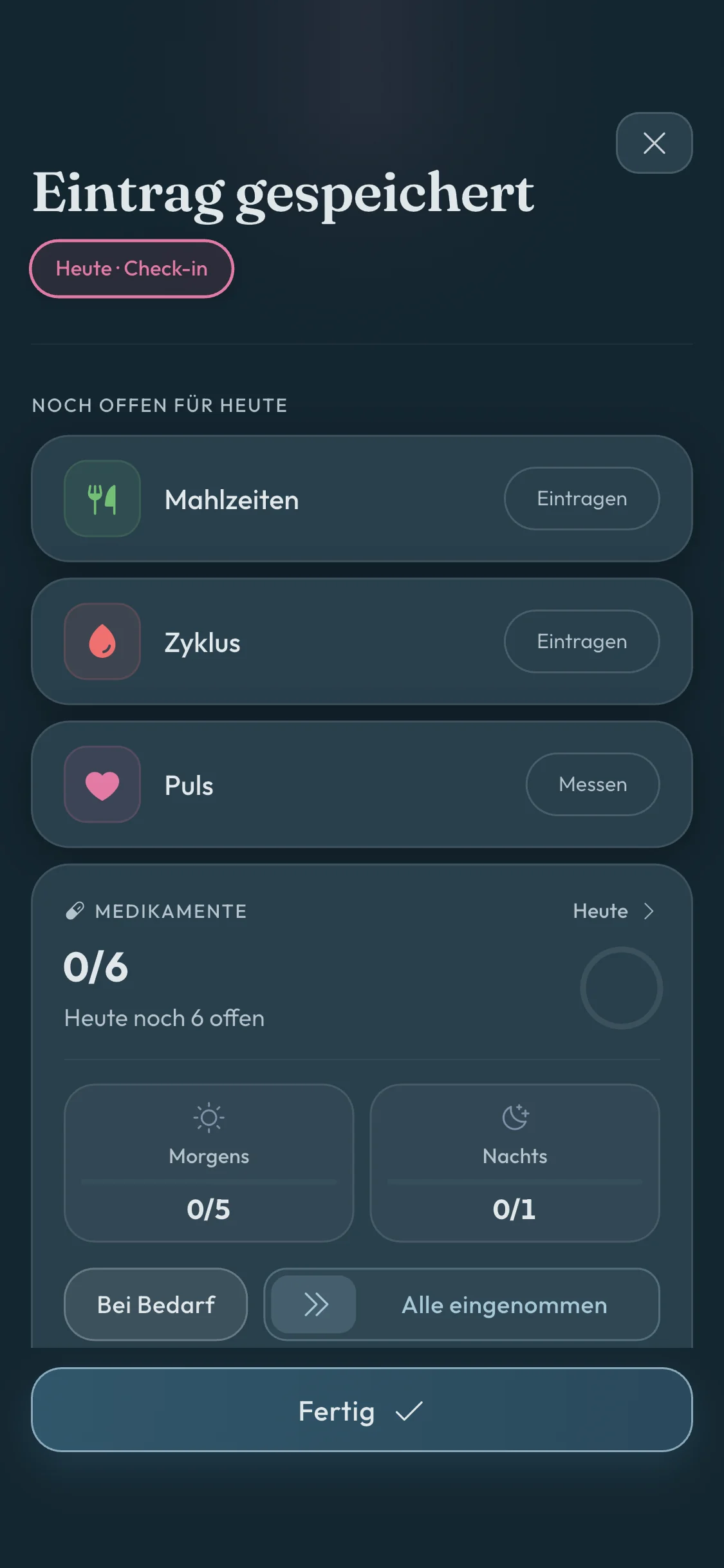
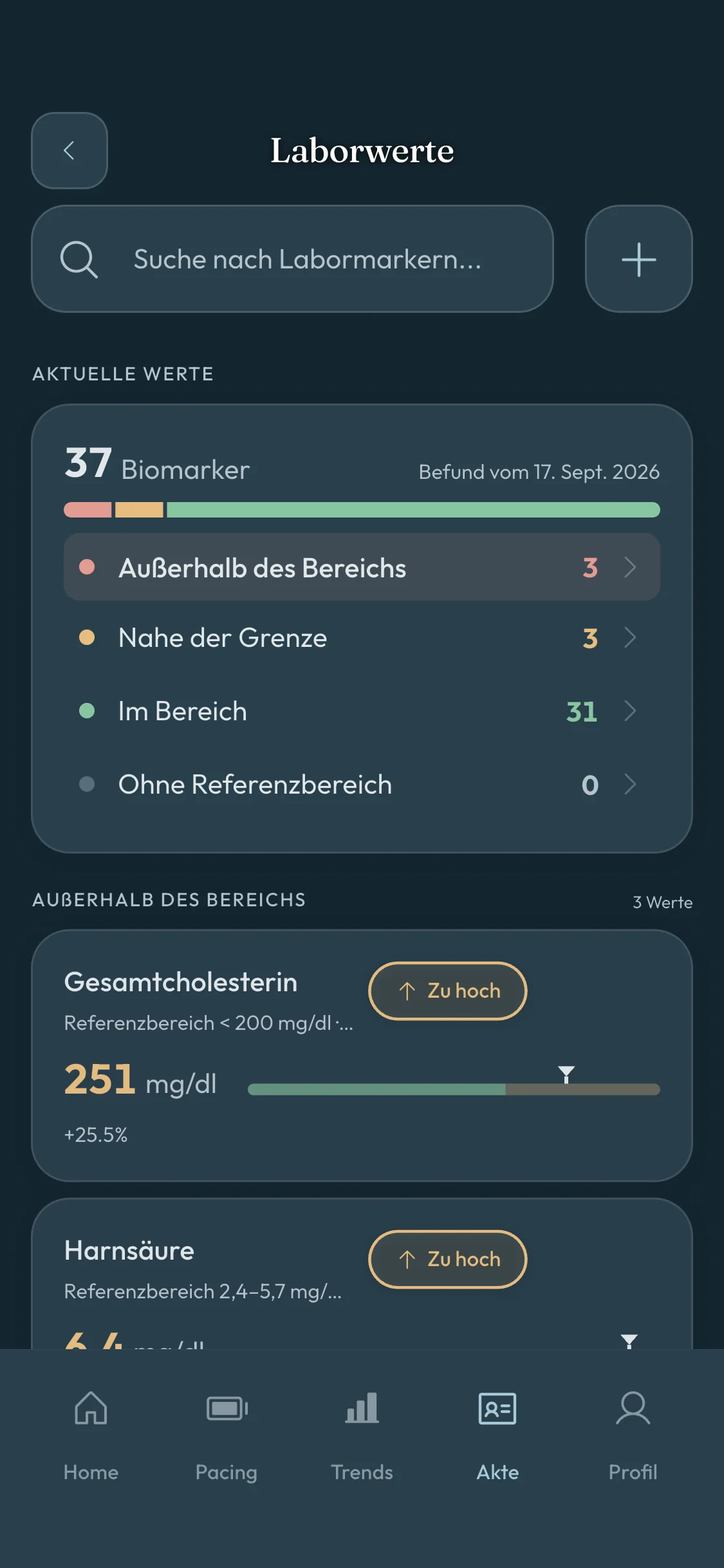
Medication and lab values can sit beside the rest of your history without crowding the pacing flow.
Common questions about Long COVID
What are common Long COVID symptoms?
Commonly reported problems include fatigue, reduced capacity, brain fog, sleep disturbance, breathlessness, pain and sometimes autonomic symptoms such as palpitations or dizziness.
Can Long COVID include PEM?
Yes. A subset of people develop delayed and disproportionate worsening after exertion. When that happens, PEM-oriented pacing and load management become relevant.
Can Long COVID become ME/CFS?
Some people with Long COVID develop a pattern that meets ME/CFS diagnostic criteria, but not every Long COVID case is ME/CFS.
Can Long COVID cause POTS?
POTS and other forms of orthostatic intolerance have been described after COVID-19. Persistent upright-triggered palpitations, dizziness or weakness deserve clinical assessment.
Editorial standards
The linked guidelines and institutional resources explain the medical background. Editorial responsibility and any documented medical review are identified separately.
Medical background: 5 sources
Educational context – not a substitute for medical diagnosis
Links to related knowledge, questionnaires, and methodology
Sources and further reading
German Federal Health Portal — Long COVID
Open source
CDC — Long COVID clinical overview
Open source
NICE — managing the long-term effects of COVID-19
Open source
Understand PEM
Open source
Understand ME/CFS
Open source
Explore Long COVID in context
Understand PEM
When symptoms worsen disproportionately after physical or cognitive exertion.
POTS and orthostatic intolerance
When palpitations, dizziness or brain fog become worse while upright.
Understand ME/CFS
How PEM, loss of function, sleep and cognitive symptoms fit into an ME/CFS pattern.
Brain fog
Concentration, memory and processing-speed problems in more detail.
Pacing
How activity and recovery can be structured when exertion tolerance is limited.