
POTS: symptoms, diagnosis and orthostatic intolerance
Understand postural orthostatic tachycardia syndrome (POTS): upright-triggered palpitations, dizziness, brain fog, diagnostic criteria, orthostatic intolerance and overlap with Long COVID or ME/CFS.
POTS in brief
POTS combines orthostatic symptoms with an excessive heart-rate rise while upright.
Common symptoms include palpitations, lightheadedness, weakness, fatigue, brain fog, nausea, tremor and sometimes fainting.
Diagnosis uses the symptom history plus heart-rate and blood-pressure measurements during standing or tilt-table testing, after relevant alternatives are excluded.
POTS can occur with Long COVID or ME/CFS, but it remains a separate diagnosis and is not identical to all orthostatic intolerance.
POTS stands for postural orthostatic tachycardia syndrome. Symptoms become worse while upright and heart rate rises excessively after standing. POTS is a form of dysautonomia and one specific type of orthostatic intolerance. Palpitations, dizziness, fatigue or brain fog can occur, but symptoms alone do not establish the diagnosis.
Key points
symptoms are typically worse while sitting or standing and often improve while lying down
an adult heart-rate rise of at least about 30 beats per minute within 10 minutes is a central criterion
the threshold is 40 beats per minute for adolescents
significant orthostatic hypotension needs to be excluded for the classic POTS diagnosis
orthostatic intolerance can exist even when POTS criteria are not met
Editorial responsibility
Elara Health
Patient-centered health information
Last updated
September 18, 2026
What is POTS?
POTS is a disorder of the body’s cardiovascular response to upright posture. When a person moves from lying to sitting or standing, heart rate rises excessively and orthostatic symptoms appear or worsen.
POTS is not the same as orthostatic hypotension. In orthostatic hypotension, blood pressure falls substantially after standing. In POTS, the defining feature is the excessive heart-rate response without that degree of early blood-pressure fall.
Common POTS symptoms
Symptoms vary widely and are often triggered by standing or prolonged sitting. Many people notice clear improvement after lying down.
POTS can also cause general and cognitive symptoms, which is one reason it may be confused with anxiety, fatigue disorders or other conditions unless the upright trigger is recognized.
palpitations or pounding heart while upright
lightheadedness, dizziness or near-fainting
weakness, tremor, sweating or nausea
brain fog and concentration problems
fatigue and reduced exercise tolerance
How is POTS diagnosed?
Diagnosis is based on an abnormal heart-rate response to standing together with orthostatic symptoms. Commonly used criteria include an increase of at least about 30 beats per minute in adults, or 40 in adolescents, within the first 10 minutes upright.
Clinicians also need to exclude significant orthostatic hypotension and other reasons for sinus tachycardia. A 10-minute standing test or head-up tilt-table test may be used. Home measurements can provide useful context but do not replace clinical diagnosis.
What is orthostatic intolerance?
Orthostatic intolerance is the broader concept: symptoms become worse while upright and may improve when lying down. POTS and orthostatic hypotension are two defined forms, but people can have clinically important orthostatic intolerance without meeting either set of criteria.
That is why symptom timing and the relationship to posture matter in addition to a single heart-rate number.
POTS in Long COVID and ME/CFS
POTS and other autonomic problems are described in Long COVID and ME/CFS. In ME/CFS, upright stress can also contribute to post-exertional worsening.
Palpitations or dizziness therefore need their own assessment rather than being assumed to be POTS from the diagnosis label alone.
More detail when you need it.
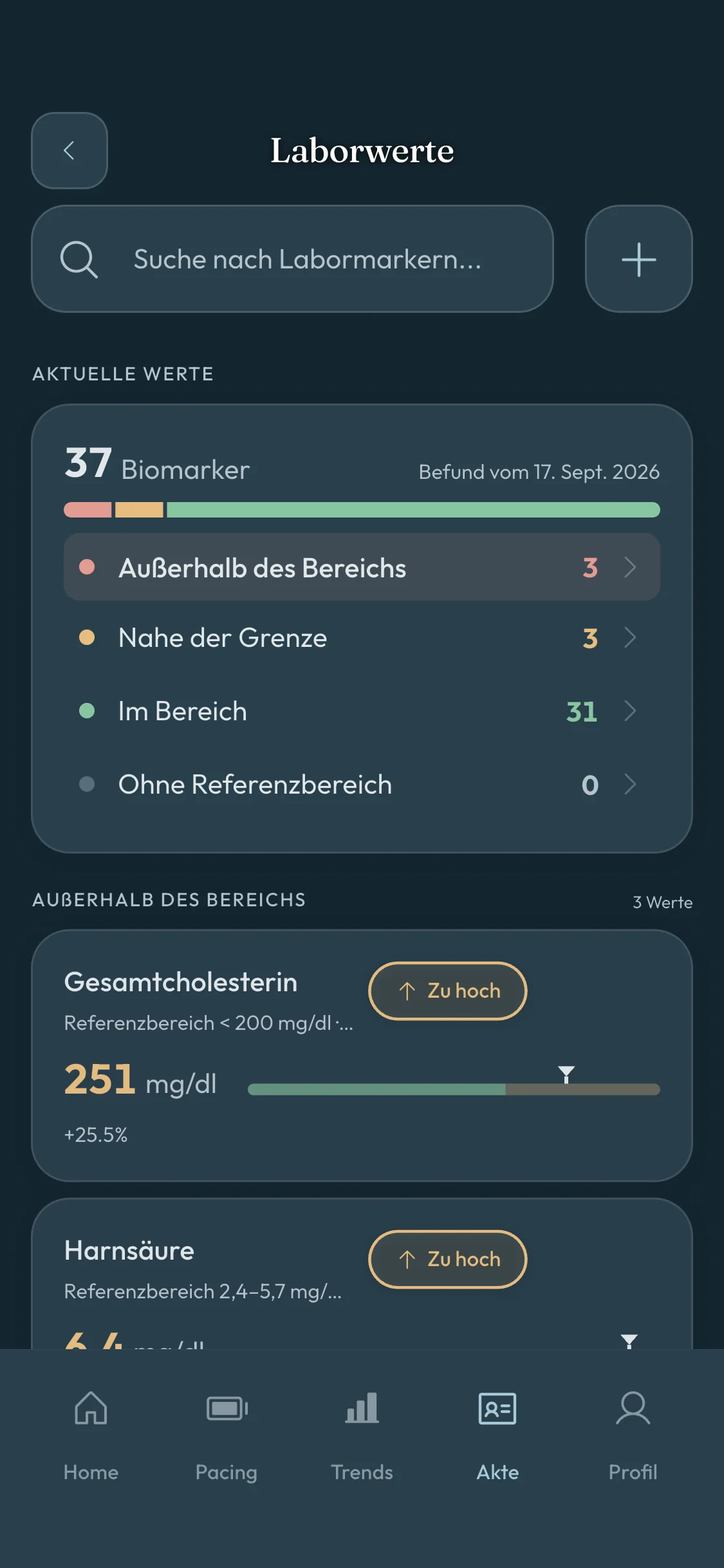
Medication and lab values can sit beside the rest of your history without crowding the pacing flow.

Common questions about POTS
What does POTS stand for?
POTS stands for postural orthostatic tachycardia syndrome, a form of dysautonomia with orthostatic symptoms and an excessive heart-rate rise while upright.
What are common POTS symptoms?
Common symptoms include palpitations, lightheadedness, weakness, nausea, tremor, brain fog and fatigue that become worse while upright.
How is POTS tested?
Heart rate and blood pressure are measured while moving from lying to upright, often in a 10-minute standing test or tilt-table test. Symptoms and alternative causes are assessed as well.
Can POTS occur with Long COVID or ME/CFS?
Yes. POTS and other forms of orthostatic intolerance are described in both conditions, but POTS requires its own diagnostic criteria.
Editorial standards
The linked guidelines and institutional resources explain the medical background. Editorial responsibility and any documented medical review are identified separately.
Medical background: 3 sources
Educational context – not a substitute for medical diagnosis
Links to related knowledge, questionnaires, and methodology
Sources and further reading
Johns Hopkins Medicine — POTS
Open source
German ME/CFS clinical guide — orthostatic intolerance and POTS
Open source
German Federal Health Portal — ICD-10 G90.80 POTS
Open source