
Lab values in fatigue: ferritin, vitamin D, B12, and broader symptom context
Which lab values actually matter in chronic fatigue and exhaustion – ferritin, vitamin D, B12, and more – and when symptom context matters more than a single value.
Short answer
In chronic fatigue, there is rarely one decisive lab value.
Ferritin, vitamin D, vitamin B12, thyroid values, and inflammation markers can provide useful clues, but they do not explain every exhaustion pattern.
The longer symptoms persist or the more exertion response, PEM, or reduced daily function matter, the more important it becomes to connect biomarkers with symptoms and course over time.
When fatigue sets in, many people first look for a single lab value. That is understandable but often too narrow. These pages show which markers come up most often, how to interpret them – and why course, exertion response, and illness context remain decisive.
Key points
Lab values help with orientation and exclusion, but they are rarely the full explanation.
Ferritin, vitamin D, and vitamin B12 are common fatigue-related searches and need context.
Normal labs do not rule out exertion-related worsening or PEM.
Fatigue usually becomes clearer when biomarkers, symptom patterns, and illness context are considered together.
Editorial responsibility
Elara Health
Patient-centered health information
Last updated
September 13, 2026
Questionnaires that complement fatigue-related lab questions
When lab values alone do not explain the picture, structured symptom capture often adds the missing context.
ME/CFS symptom check
Useful when fatigue, PEM, sleep problems, and cognitive symptoms appear together.
Fibromyalgia symptom check
Helpful when fatigue is paired with widespread pain, poor sleep, and symptom severity patterns.
Questionnaire overview
See all available assessments if the symptom picture is still unclear.
What lab values can – and cannot – do
Lab values can give important clues about iron deficiency, vitamin deficits, thyroid disorders, or inflammation. In chronic fatigue, ferritin, vitamin D, vitamin B12, TSH, and CRP are among the most commonly checked markers.
Abnormal values can partly explain symptoms – but normal values do not rule out that complaints are real. Especially when exertion-related worsening, PEM, or persistent daily limitation are involved, a standard panel often is not enough.
When symptom context matters more
When complaints persist despite unremarkable values, when exertion delays symptom worsening, or when daily capacity is markedly reduced, it pays to look beyond individual markers. Course, recovery patterns, and the link to activity often matter more than any single number.
Structured symptom documentation, questionnaires like the ME/CFS symptom check or FUNCAP-27, and a look at PEM-typical patterns complement lab data where they alone do not lead further.
Individual markers give clues – not the full picture
Normal values do not rule out real symptoms
Take course and exertion response seriously
Look beyond standard panels when PEM is suspected
More context
More detail when you need it.
Medication and lab values can sit beside the rest of your history without crowding the pacing flow.
.png&w=1920&q=85)
.png&w=1920&q=85)
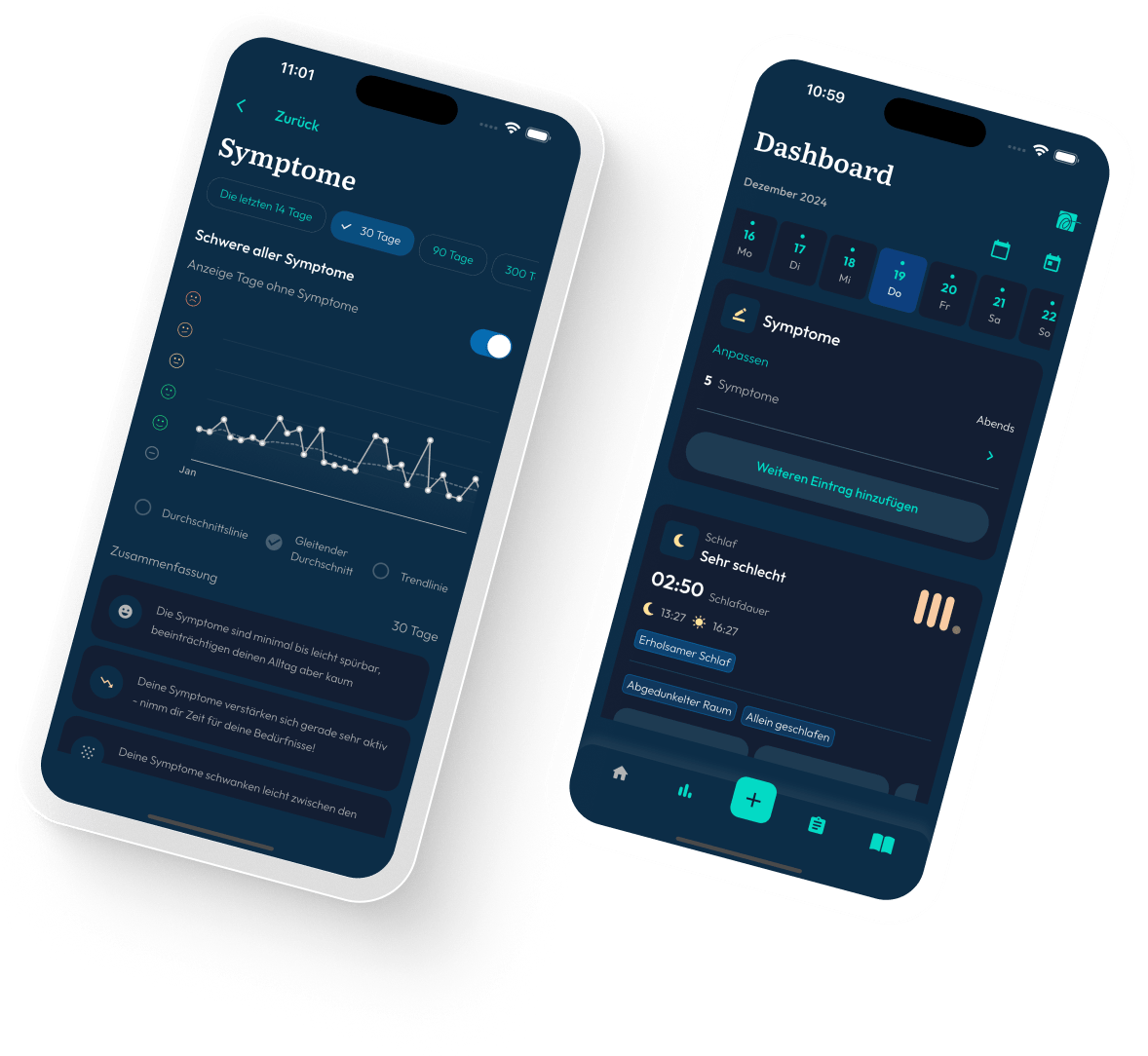
Make fatigue patterns visible
Document symptoms, energy, and possible triggers and see connections develop over time.
Common questions about lab values in fatigue
Is there one lab value for fatigue?
No. Fatigue and exhaustion arise from very different patterns. Individual values can matter, but they rarely explain the whole symptom picture on their own.
Do normal labs mean nothing physical is going on?
No. Normal standard values do not mean symptoms are unreal or irrelevant. Exertion response, illness context, and day-to-day function may still need much closer attention.
When does ME/CFS or PEM context matter more than one marker?
Especially when symptoms worsen after exertion, daily capacity is clearly reduced, or complaints persist despite seemingly normal individual values.
Editorial standards
The linked guidelines and institutional resources explain the medical background. Editorial responsibility and any documented medical review are identified separately.
Medical background: 3 sources
Educational context – not a substitute for medical diagnosis
Links to related knowledge, questionnaires, and methodology
Guidelines and medical background
Recommended next pages
Lab values in chronic fatigue
The overview of common markers and their limits.
Ferritin and fatigue
How iron status can matter in exhaustion without explaining everything.
Vitamin D and exhaustion
What this marker can contribute and what it cannot.
Vitamin B12 and fatigue
Why neurological and general fatigue complaints need differentiation.
TSH and fatigue
When thyroid context matters more in low energy and sluggish recovery.
CRP and fatigue
When an inflammation marker matters in recovery problems – and when it does not.
HbA1c and fatigue
When metabolic values belong in the picture of unstable energy and exhaustion.
Biomarker overview
Related article from Elara Health.
What is ME/CFS?
Related article from Elara Health.
What is PEM?
Related article from Elara Health.