
Fatigue: which blood tests to ask for – and what they mean
In chronic fatigue, doctors often check a blood count, ferritin, vitamin D, B12, TSH, CRP, and blood sugar. Which value fits which symptom – and why you can feel exhausted even when every value looks “normal”.
Short answer
In persistent fatigue, a blood count, ferritin, vitamin D, vitamin B12, TSH (thyroid), CRP, and blood sugar are among the most commonly checked values.
Which value is useful depends on your associated symptoms – a single lab value rarely explains chronic exhaustion on its own.
Even “normal” values do not rule out real symptoms: a reference range means “not ill”, not automatically “optimally supplied”.
When symptoms worsen in a delayed way after exertion, the symptom course often matters more than any single value.
People living with ongoing fatigue often want a short list of decisive values. This page shows which blood values are checked most often, which value fits which symptom – and why real symptoms can persist even when every value looks “normal”. If symptoms worsen after exertion or capacity is clearly reduced, lab questions alone usually stop being enough.
Key points
Typical markers: blood count, ferritin/iron, vitamin D, vitamin B12, TSH, CRP, blood sugar.
Which blood value is relevant depends on the associated symptoms.
A reference range is not the same as an optimal range.
With exertion-related worsening, the course matters more than the single value.
Editorial responsibility
Elara Health
Patient-centered health information
Last updated
September 13, 2026
Questionnaires that complement fatigue-related lab questions
When lab values alone do not explain the picture, structured symptom capture often adds the missing context.
ME/CFS symptom check
Useful when fatigue, PEM, sleep problems, and cognitive symptoms appear together.
Fibromyalgia symptom check
Helpful when fatigue is paired with widespread pain, poor sleep, and symptom severity patterns.
Questionnaire overview
See all available assessments if the symptom picture is still unclear.
Which blood values are checked most often in fatigue
For longer-lasting fatigue, doctors usually start with a basic panel. It commonly includes a blood count, ferritin and iron status, vitamin D, vitamin B12, the thyroid (TSH), and inflammation or metabolic values such as CRP and blood sugar.
The German fatigue guideline (DEGAM) deliberately recommends a manageable basic panel and warns against ordering many values without a clear reason. You will find concrete reference ranges and the meaning of each individual marker on the respective biomarker pages – that is where we keep values and interpretation up to date.
Blood count (small/large) – clues to anemia, infection, or inflammation
Ferritin and iron status – iron stores
Vitamin D and vitamin B12 – common deficiency questions
TSH (and fT3/fT4 if needed) – thyroid function
CRP – sign of inflammatory processes
Blood sugar and HbA1c – metabolism
Which blood value fits which symptom?
Fatigue rarely comes alone. The accompanying symptoms often give the decisive clue about which value is worth checking first. This mapping does not replace a medical examination, but it helps you prepare the conversation more precisely.
Fatigue + pallor + hair loss + concentration problems → iron / ferritin
Fatigue + low drive, especially in the dark months → vitamin D
Fatigue + tingling + forgetfulness / brain fog → vitamin B12 / folate
Fatigue + feeling cold + weight gain + dry skin → thyroid / TSH
Fatigue + recurrent infections or feeling unwell → CRP / blood count
Fatigue + cravings + concentration dips after eating → blood sugar / HbA1c
Fatigue + muscle cramps under chronic stress → magnesium
Large or small blood count – what is enough in fatigue?
The small blood count shows, among other things, hemoglobin and red blood cells and can reveal anemia. However, it says nothing about iron stores, vitamins, or the thyroid.
That is why individual values are often added in a targeted way – such as ferritin, vitamin D, vitamin B12, or TSH. Which addition makes sense depends on the accompanying symptoms and should be decided medically.
“All values normal – and still tired?”
This sentence is one of the most common reasons people keep searching. The key point: a “normal” value means it lies within the statistical reference range – not necessarily that it is optimal for you. With iron stores (ferritin) in particular, a value in the lower normal range can already go along with symptoms (latent iron deficiency).
On top of that, some values are not measured routinely in a standard panel. And a single result is always just a snapshot – only the course over weeks reveals patterns that one-off value cannot show.
A reference range is not an optimal range – “normal” is not automatically “well supplied”
Some values are not on the standard lab order
A single result is a snapshot – the course matters
Other possible causes: sleep disorders, long COVID, depression, ME/CFS (diagnosis of exclusion)
Fatigue in women – what also counts
In women, regular blood loss through menstruation can have a stronger effect on iron and ferritin status. Thyroid disorders such as Hashimoto are also more common. Both are worth raising specifically in the conversation with your doctor.
When to have fatigue medically assessed
As a rough orientation: if pronounced fatigue without an obvious cause lasts longer than about two to four weeks, clearly limits daily life, or comes with warning signs such as unintended weight loss, fever, night sweats, or shortness of breath, it should be medically assessed.
Lab values then mainly serve to identify or rule out treatable causes – not to explain a complex exhaustion picture on their own.
When symptom context matters more than the single value
If standard values provide no clear explanation while symptoms persist, it pays to look beyond individual markers. Especially when exertion delays symptom worsening (a sign of PEM) or capacity has been reduced for months, course, recovery patterns, and daily function become more decisive.
Here, structured symptom capture and questionnaires like the ME/CFS symptom check or FUNCAP-27 help make visible the patterns that a single lab value cannot show.
More context
More detail when you need it.
Medication and lab values can sit beside the rest of your history without crowding the pacing flow.
.png&w=1920&q=85)
.png&w=1920&q=85)
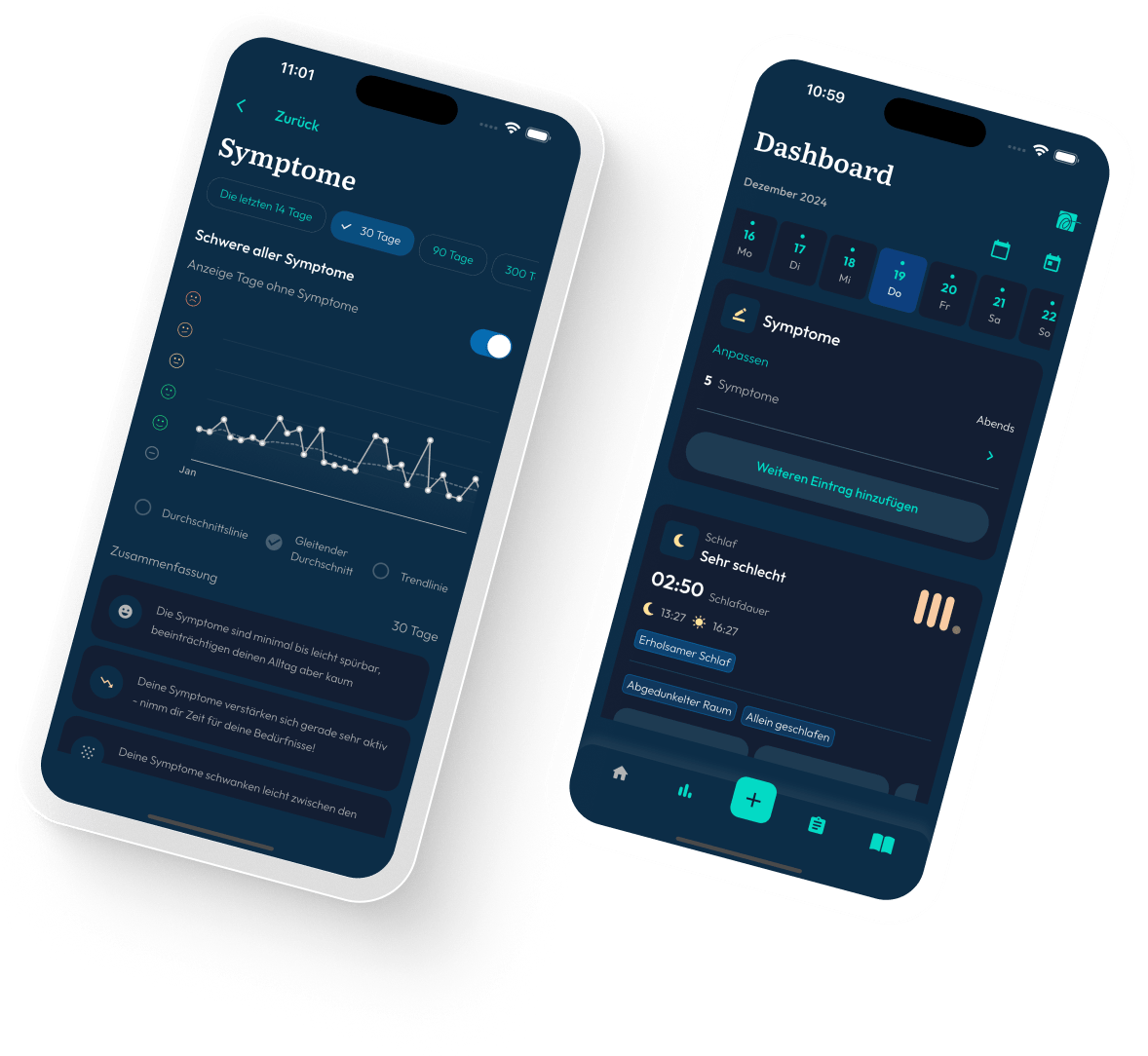
Make fatigue patterns visible
Document symptoms, energy, and possible triggers and see connections develop over time.
FAQ
Which blood values should I have tested for constant fatigue?
A blood count, ferritin, vitamin D, vitamin B12, TSH, CRP, and blood sugar are often useful. Which values matter in your case depends on the accompanying symptoms and should be decided medically.
Can I be constantly tired despite normal blood values?
Yes. “Normal” only means a value lies within the reference range – not that it is optimal for you or that no cause is present. In that case, course, exertion response, and further assessment become more important.
At what ferritin level do you become tired?
There is no fixed cutoff – thresholds are debated and depend on context. Even values in the lower normal range can go along with symptoms. More on our page “Ferritin and fatigue”.
Which vitamin deficiency causes fatigue?
Vitamin D and vitamin B12 are most often linked to fatigue, sometimes folate as well. A deficiency can contribute, but it does not explain every form of exhaustion on its own.
Is a small blood count enough for fatigue?
The small blood count can show anemia, but it says nothing about iron stores, vitamins, or the thyroid. That is why individual values such as ferritin, B12, vitamin D, or TSH are often added.
What can I do if my doctor finds nothing?
If the basic panel is unremarkable but symptoms persist, it helps to document the symptom course in a structured way and to take exertion responses such as worsening after activity seriously. This makes patterns like PEM visible and prepares the next conversation more precisely.
Does a high TSH value make you tired?
An elevated TSH value can indicate an underactive thyroid, which can go along with fatigue, feeling cold, and weight gain. Interpretation belongs in medical hands; more on our page “TSH and fatigue”.
Can chronic fatigue be diagnosed through blood values?
Not directly. There is no single lab value that proves chronic fatigue or ME/CFS. Lab values mainly serve to rule out other causes; ME/CFS is a clinical diagnosis of exclusion.
Editorial standards
The linked guidelines and institutional resources explain the medical background. Editorial responsibility and any documented medical review are identified separately.
Medical background: 4 sources
Educational context – not a substitute for medical diagnosis
Links to related knowledge, questionnaires, and methodology
Guidelines and medical background
NICE NG206 — ME/CFS: diagnosis and management
Open source
MedlinePlus / NLM — Ferritin blood test
Open source
MedlinePlus / NLM — Vitamin B test
Open source
DEGAM S3 guideline “Fatigue” (AWMF 053-002)
Open source
Related content
Ferritin and fatigue
How iron status and exhaustion can be connected.
Vitamin D and exhaustion
What this marker can contribute and what it cannot.
Vitamin B12 and fatigue
Why neurological and general complaints should be read with nuance.
TSH and fatigue
When thyroid context matters more in low energy.
CRP and fatigue
When an inflammation marker matters in recovery problems.
HbA1c and fatigue
When metabolic values belong in the picture of unstable energy.
Biomarker overview
Related article from Elara Health.
What is ME/CFS?
Related article from Elara Health.
What is PEM?
Related article from Elara Health.