
Vitamin D and exhaustion: when this marker becomes relevant
When vitamin D may matter in exhaustion – and why the marker does not explain every complex fatigue pattern.
- Author
- Frederik MarquartFounder & CEO, Elara Health
- Editorial responsibility
- Elara HealthPatient-centered health information
- Last updated
- September 13, 2026
Short answer
Vitamin D testing may be appropriate when symptoms, signs or risk factors support it; fatigue alone is not a reason for routine screening.
If vitamin D is measured, the result should be read with the reason for testing, risk factors, the laboratory method and other findings.
Persistent exertion-related worsening usually requires more context than vitamin D alone.
Vitamin D is commonly searched in fatigue, but it should not be tested routinely for nonspecific exhaustion alone. Testing becomes more appropriate when there are compatible symptoms or signs, a higher risk of deficiency, or another specific clinical reason.
Key points
Vitamin D is not a general fatigue test; testing should have a specific clinical reason.
Nonspecific exhaustion almost always needs more than one value.
Symptom course and exertion response strongly shape interpretation.
Exertion response and symptom course remain separate clinical questions and are not inferred from the vitamin D result.
Questionnaires that complement fatigue-related lab questions
When lab values alone do not explain the picture, structured symptom capture often adds the missing context.
Why vitamin D comes up so often
Vitamin D is widely known and therefore commonly considered in fatigue-related questions. Guidelines advise against routine testing without an appropriate clinical reason.
When symptoms are nonspecific, people often look for concrete and easy-to-understand explanations. Vitamin D offers a familiar anchor.
What the marker can contribute
Vitamin D can be part of the work-up when symptoms, risk factors or other findings make deficiency plausible. Nonspecific fatigue alone does not justify routine testing.
Still, the marker does not tell you much about delayed worsening after exertion, unstable capacity, or a more complex illness pattern.
appropriate to measure when there is a specific clinical indication
not sufficient for complex fatigue patterns
should always be read with symptoms and course
When vitamin D stops being the main question
If routine daily activities trigger disproportionate worsening, or if brain fog, PEM, or clear personal limits dominate, symptom context usually becomes more important.
At that point, the key question is no longer only whether one marker is abnormal, but which pattern explains the overall picture.
More detail when you need it.
Medication and lab values can sit beside the rest of your history without crowding the pacing flow.
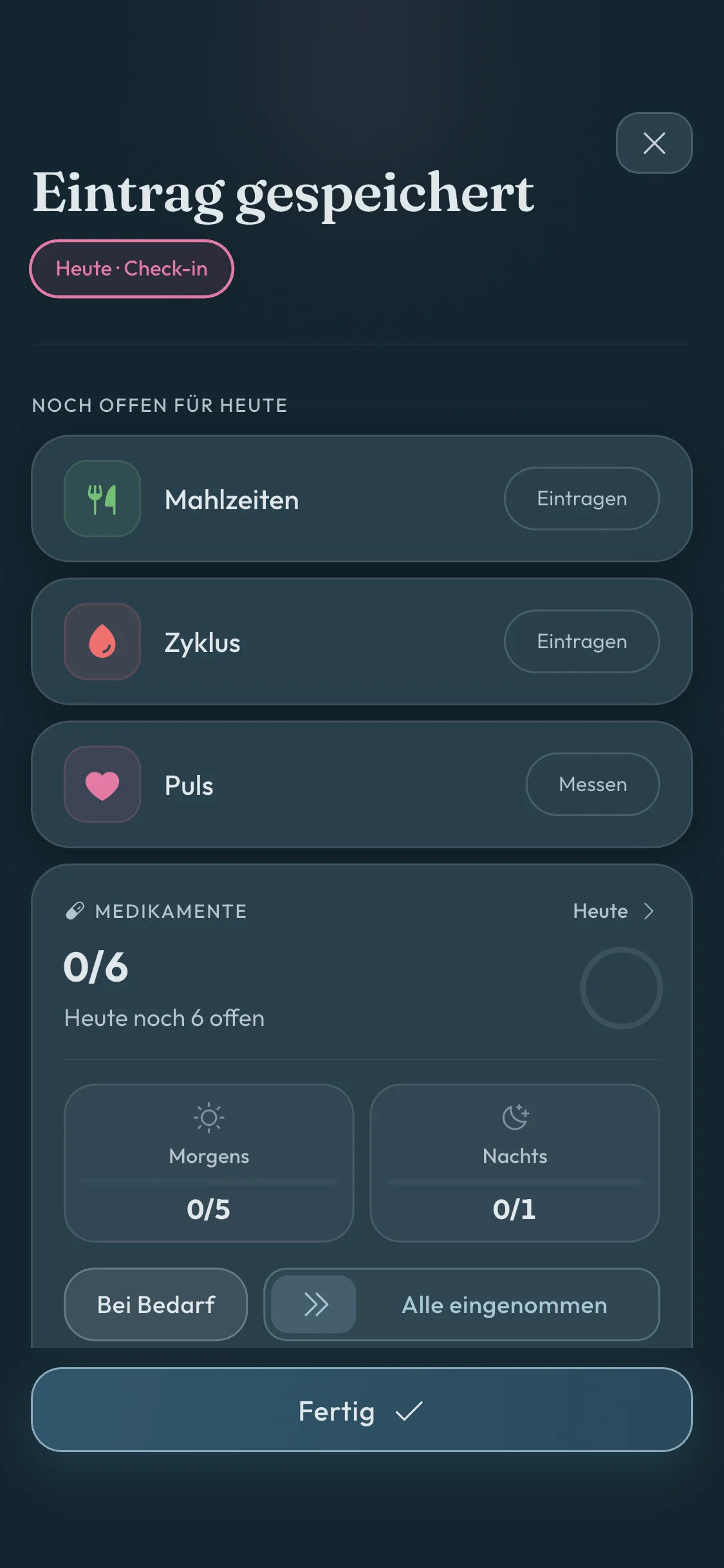
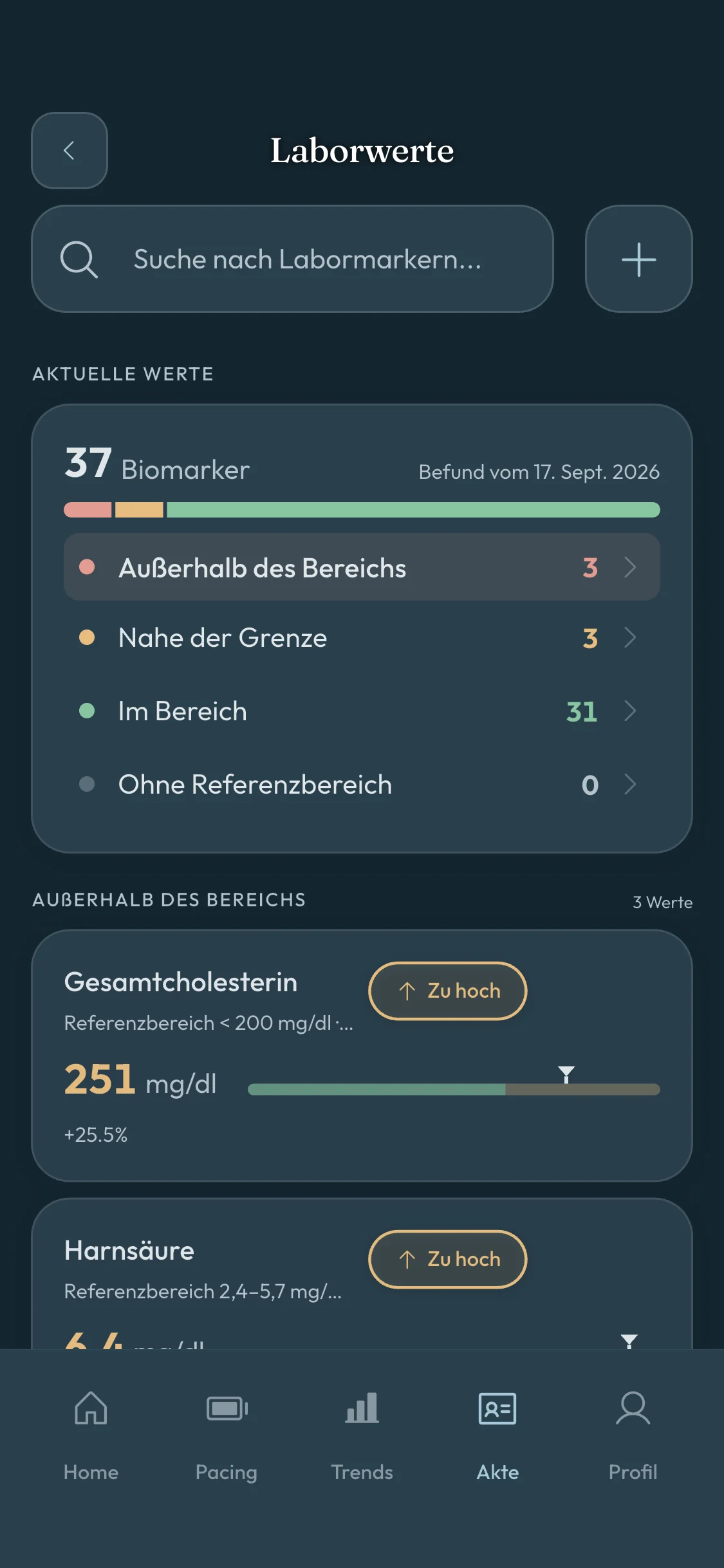
Elara App
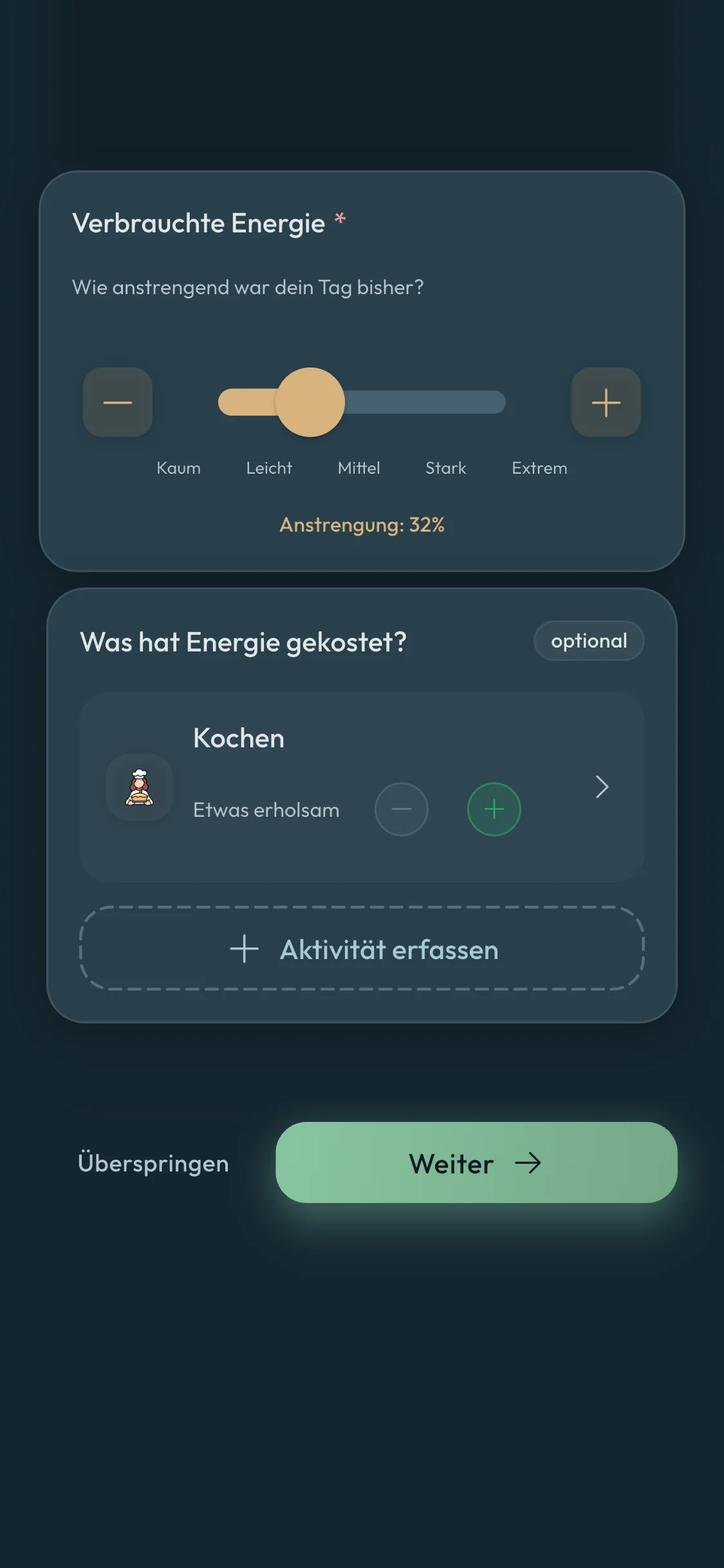
Make fatigue patterns visible
Document symptoms, energy, and possible triggers and see connections develop over time.
FAQ
Can vitamin D fully explain exhaustion?
Not in every case. The marker may matter, but it often explains complex or exertion-related complaints only partly or not at all.
Why is vitamin D such a common fatigue search term?
Because it is familiar, concrete, and easy to understand. That makes it a common search topic, but it does not mean testing is routinely needed for nonspecific fatigue.
What if vitamin D is normal but exhaustion remains?
Then interpretation usually needs to widen toward other markers, symptom course, exertion response, and broader illness context.
Guidelines and medical background
The linked guidelines and institutional resources explain the medical background. Editorial responsibility and any documented medical review are identified separately.
Editorial standards
- Medical background: 3 sources
- Educational context – not a substitute for medical diagnosis
- Links to related knowledge, questionnaires, and methodology