
Ferritin and fatigue: what iron status can explain and what it cannot
When ferritin may matter in fatigue – and why a single value does not explain every exhaustion pattern.
Short answer
Ferritin can matter in fatigue because it gives clues about iron storage status.
A single ferritin value, however, does not automatically explain complex or persistent exhaustion.
When exertion response, brain fog, or clearly unstable daily function dominate, more context is usually needed than ferritin alone.
Ferritin is one of the most common fatigue-related lab searches. That makes sense because iron deficiency can contribute to fatigue. At the same time, ferritin is often over-interpreted when it is separated from the wider symptom picture.
Key points
Ferritin is a context marker, not a full fatigue model.
Iron status can affect symptoms without explaining every form of exertion intolerance.
Course over time, associated values, and symptoms remain essential.
Persistent worsening after activity points to a need for broader context.
Editorial responsibility
Elara Health
Patient-centered health information
Last updated
September 13, 2026
Questionnaires that complement fatigue-related lab questions
When lab values alone do not explain the picture, structured symptom capture often adds the missing context.
ME/CFS symptom check
Useful when fatigue, PEM, sleep problems, and cognitive symptoms appear together.
Fibromyalgia symptom check
Helpful when fatigue is paired with widespread pain, poor sleep, and symptom severity patterns.
Questionnaire overview
See all available assessments if the symptom picture is still unclear.
Why ferritin is searched so often
Ferritin is a familiar marker for iron stores, so it is often considered early in fatigue-related workups.
For many people, it feels like a concrete and understandable explanation when low energy, concentration problems, or exhaustion dominate.
What ferritin can do and where its limits are
An abnormal iron status can contribute to fatigue. Still, ferritin alone does not tell you much about PEM, recovery dynamics, or broader multisystem symptoms.
That is why ferritin rarely acts as the full answer in prolonged, fluctuating, or exertion-related fatigue.
ferritin helps with deficiency and context questions
ferritin is not the whole exhaustion picture
exertion response remains a separate layer to examine
When a broader view becomes necessary
If fatigue persists despite interpreting iron status, or symptoms increase disproportionately after activity, the picture usually needs to widen.
At that point, ME/CFS, PEM, or pacing context often becomes more useful than hoping for one single lab explanation.
More context
More detail when you need it.
Medication and lab values can sit beside the rest of your history without crowding the pacing flow.
.png&w=1920&q=85)
.png&w=1920&q=85)
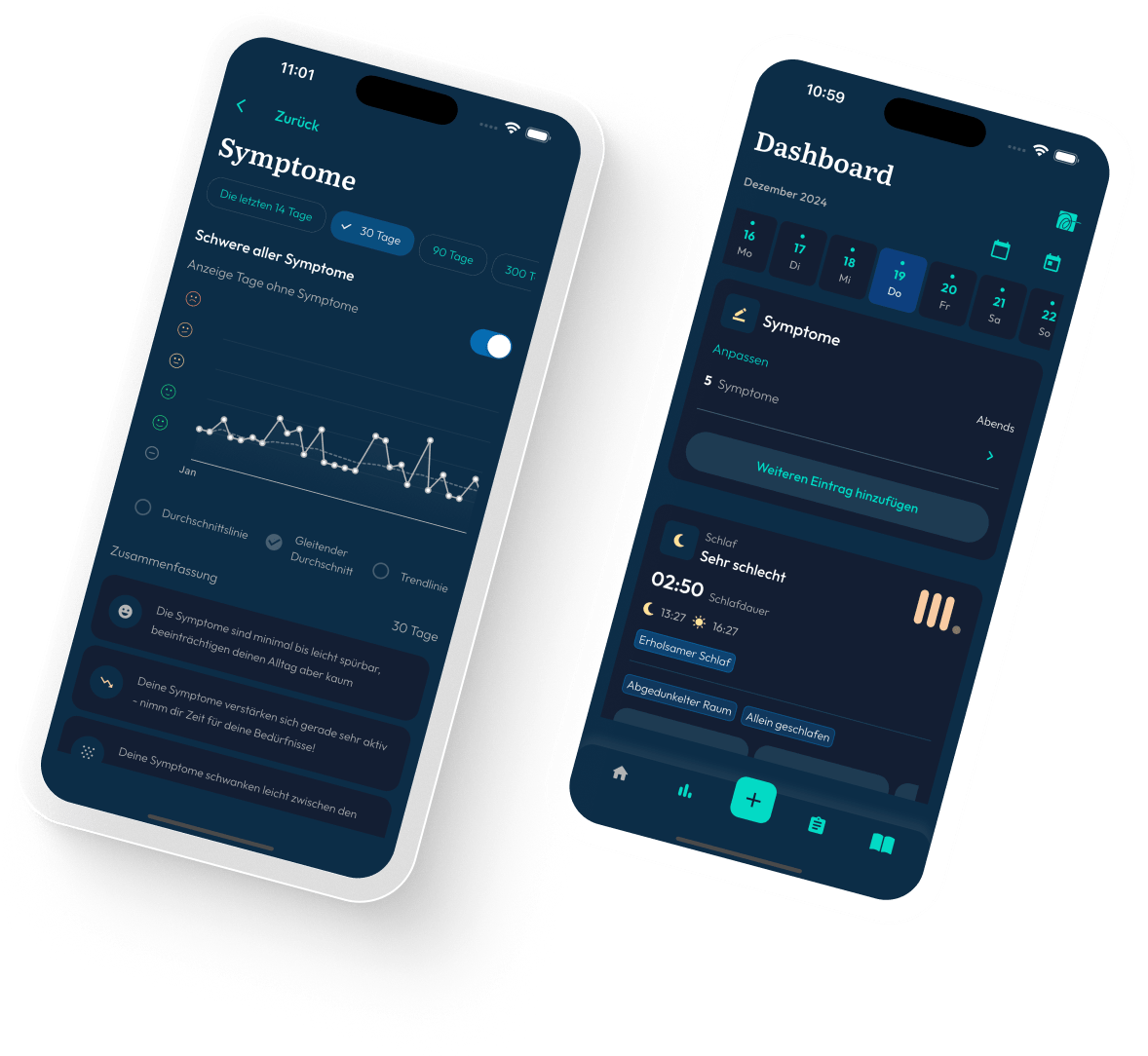
Make fatigue patterns visible
Document symptoms, energy, and possible triggers and see connections develop over time.
FAQ
Can ferritin alone explain chronic fatigue?
Sometimes iron status is relevant, but a single ferritin value often does not fully explain complex, persistent, or exertion-related exhaustion.
Why do so many people start with ferritin when they are tired?
Because ferritin is a familiar and tangible marker, and iron deficiency can influence fatigue. That makes it a common starting point.
What if ferritin is normal but fatigue remains?
Then interpretation often needs to widen through other markers, symptom course, exertion response, or a structured illness framework.
Editorial standards
The linked guidelines and institutional resources explain the medical background. Editorial responsibility and any documented medical review are identified separately.
Medical background: 2 sources
Educational context – not a substitute for medical diagnosis
Links to related knowledge, questionnaires, and methodology
Guidelines and medical background
Related content
Vitamin B12 and fatigue
Another common micronutrient marker in fatigue-related questions.
ME/CFS hub
When reduced capacity and multisystem symptoms need to be considered.
PEM hub
When activity leads to delayed worsening.
Fatigue hub
Related article from Elara Health.
Lab values in chronic fatigue
Related article from Elara Health.
Biomarker overview
Related article from Elara Health.