
Understanding PEM: symptoms, delayed worsening, pacing, and tracking
What post-exertional malaise is, how delayed worsening can appear, and how pacing, symptom tracking, heart rate, and HRV fit into the bigger picture.
Short answer
Post-exertional malaise is a disproportionate worsening of symptoms after physical, cognitive, or emotional exertion.
Symptoms typically worsen 12–48 hours after activity, but onset varies and can be noticed earlier or later.
The main levers are pattern recognition, careful pacing, and consistent tracking of exertion, symptoms, and recovery.
For many people with ME/CFS and Long COVID, PEM is a central part of the illness experience. This hub explains delayed symptom worsening, pacing, and structured self-documentation without treating a wearable value or diary entry as a prediction of what will happen next.
Key points
PEM is more than normal tiredness after activity.
A 12–48 hour delay is typical, but timing varies and is not a rigid diagnostic clock.
Pacing is not total withdrawal; it is a strategy to stabilize daily function.
Wearables and HRV can provide signals, but they still need symptom context.
Editorial responsibility
Elara Health
Patient-centered health information
Last updated
September 16, 2026
Self-tests and pacing tools
PEM and pacing become more actionable when symptom burden and function are captured in a structured way.
ME/CFS symptom check
Useful when delayed worsening after activity raises the question of ME/CFS-oriented symptom structure.
FUNCAP-27 questionnaire
Best when daily limitation, recovery instability, and functional burden should be documented.
Compare pacing apps
Find out which apps offer symptom tracking, wearable integration, and pacing support.
Why timing matters when reviewing PEM
PEM does not always become obvious during or immediately after an activity. A later worsening can make it difficult to connect symptoms with one specific demand from memory alone.
A diary can therefore be useful for placing physical, cognitive, emotional, and social exertion next to symptoms, rest, sleep, and recovery over time. That supports retrospective pattern review rather than real-time medical clearance.
Pacing and tracking: context instead of prediction
Pacing means adapting activity and recovery to current capacity and individual symptom responses. There is no single step count, heart-rate value, or HRV threshold that defines a universally safe limit.
Wearables can reduce the effort needed to document heart rate, activity, sleep, or recovery signals. Those measurements can complement symptom reports, but they should not be interpreted as a reliable warning that PEM will or will not occur.
Document physical, cognitive, emotional, and social exertion
Review delayed symptom changes in the context of previous activity
Use pacing as individualized load management rather than automatic progression
Treat wearable metrics as context, not as a diagnostic or predictive traffic light
More context
More detail when you need it.
Medication and lab values can sit beside the rest of your history without crowding the pacing flow.
.png&w=1920&q=85)
.png&w=1920&q=85)
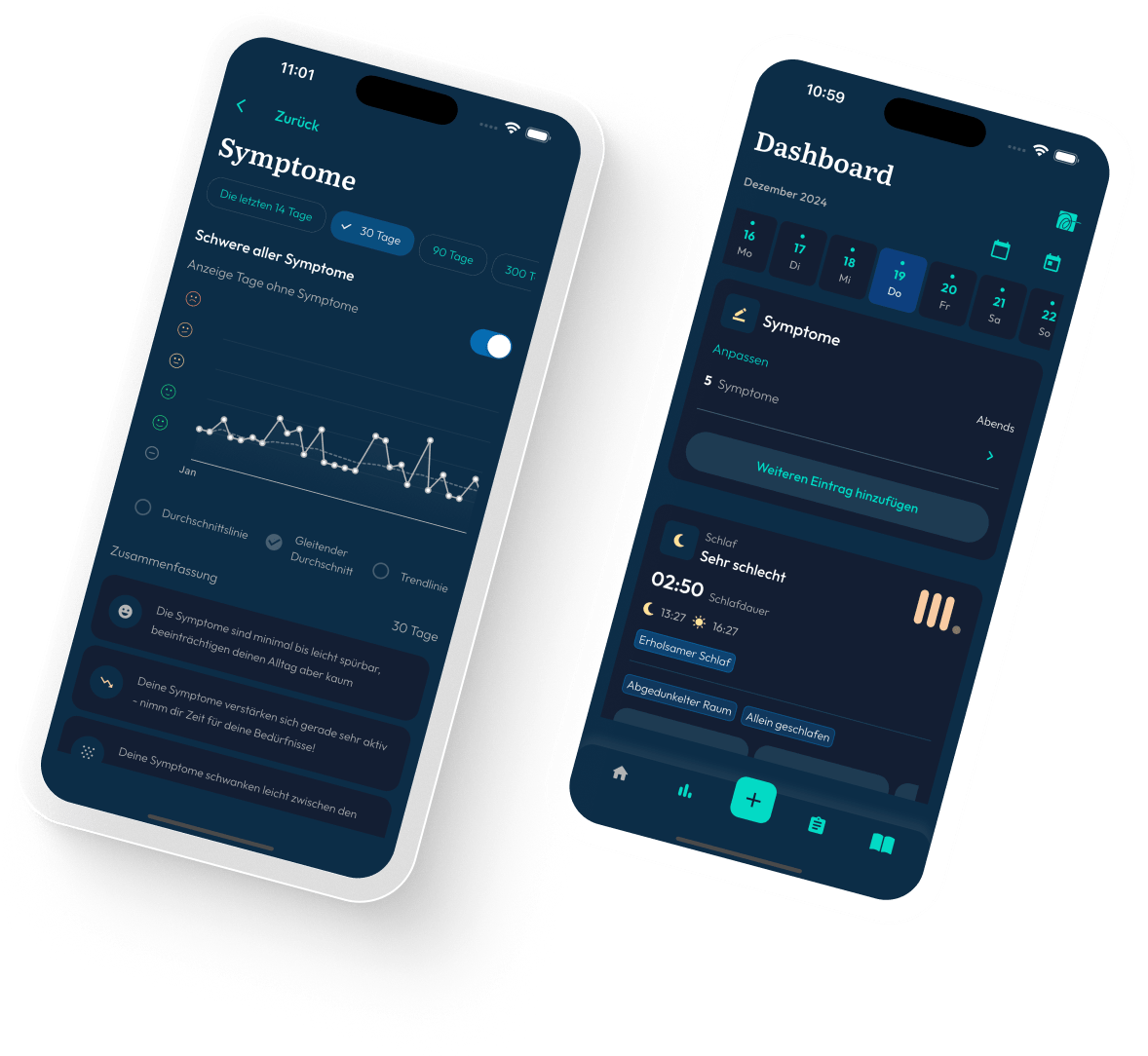
Document PEM patterns with the Elara app
Record symptoms, exertion, and recovery to better understand timing and recurring crash patterns in retrospect.
Common questions about PEM
Is PEM just severe exhaustion?
No. PEM describes a disproportionate worsening of multiple symptoms after exertion and can involve fatigue, cognitive symptoms, pain, sleep disturbance, or autonomic symptoms.
Can PEM be delayed?
Yes. Delayed onset is a defining feature. CDC describes symptoms as typically worsening 12–48 hours after activity, while individual timing can be earlier or later.
Can tracking predict PEM?
Not reliably. Tracking can make personal associations between exertion, symptoms, rest, and recovery easier to review, but it cannot tell with certainty whether a specific activity is safe or whether PEM will occur.
Editorial standards
The linked guidelines and institutional resources explain the medical background. Editorial responsibility and any documented medical review are identified separately.
Medical background: 3 sources
Educational context – not a substitute for medical diagnosis
Links to related knowledge, questionnaires, and methodology
Guidelines and medical background
Recommended next pages
What is post-exertional malaise?
Definition, timing, and key features of PEM.
How delayed can PEM be?
Why a delay of hours to days matters so much.
PEM vs. normal exhaustion
The key differences in timing, severity, and recovery.
Early signs and warning signals
Which patterns often show up before symptom worsening.
PEM & wearables: heart rate, HRV, and limits
How wearable data can add context for pacing without acting as a reliable PEM prediction system.
How long does PEM last?
Why a crash can keep shaping the next hours, days, or longer.
Pacing in ME/CFS
How careful activity and recovery planning can be structured in daily life.
What is ME/CFS?
Why PEM is so central to understanding the illness.
ME/CFS symptom check
Structure an ME/CFS-like symptom pattern using established criteria. For orientation only, not a diagnosis.
HRV and PEM: what wearables can show
Updated evidence on HRV, resting heart rate, and why these signals are not reliable stand-alone PEM predictors.
Methodology: scientific foundations at Elara
Related article from Elara Health.
Energy Envelope whitepaper
Related article from Elara Health.