
How delayed can PEM be?
PEM often does not appear right away. Common timing patterns, why delayed onset is so difficult in daily life, and how to identify triggers more reliably.
Short answer
CDC describes PEM symptoms as typically worsening 12–48 hours after activity.
Timing is not identical for everyone: changes can begin sooner or be noticed only later, and NICE describes delays of hours or days.
The useful signal is a recurring worsening pattern after exertion, not a rigid number of hours.
The delay is one of the main reasons PEM is hard to manage. If the real cost of an activity only shows up tomorrow or the next day, it becomes much harder to judge limits intuitively.
Key points
12–48 hours is the typical CDC timing description, not a hard boundary.
NICE describes PEM as delayed by hours or days and often disproportionate to the trigger.
Timing may differ across physical, cognitive, emotional, or sensory exertion.
Tracking the following days can make delayed trigger-response patterns easier to recognize.
Editorial responsibility
Elara Health
Patient-centered health information
Last updated
September 17, 2026
Self-tests and pacing tools
PEM and pacing become more actionable when symptom burden and function are captured in a structured way.
ME/CFS symptom check
Useful when delayed worsening after activity raises the question of ME/CFS-oriented symptom structure.
FUNCAP-27 questionnaire
Best when daily limitation, recovery instability, and functional burden should be documented.
Compare pacing apps
Find out which apps offer symptom tracking, wearable integration, and pacing support.
Why PEM often does not show up right away
Many people experience an activity as manageable at first. Only later do fatigue, cognitive problems, pain, sleep disruption, or autonomic symptoms become clearly worse.
That is one of the features that makes PEM so difficult. The body does not always signal overload in the moment; the impact may surface later.
Common timing patterns
CDC describes symptoms as typically worsening 12–48 hours after activity or exposure. This is a useful clinical orientation, not a cutoff: NICE emphasizes that PEM may be delayed by hours or days.
What matters most is whether exertion is followed by a recurring, disproportionate worsening pattern. Looking only for one exact delay can miss real PEM patterns.
symptoms may begin earlier in some people
12–48 hours is the typical CDC timing description
later recognition is possible because symptoms can evolve over hours or days
recovery may then take days or weeks
How to handle the delay effect in practice
It helps to evaluate exertion in the context of the following days, not just the same day. Looking only at today often underestimates PEM.
Even simple tracking of activity, cognitive load, sleep, and symptoms can make delayed patterns much easier to spot.
More context
More detail when you need it.
Medication and lab values can sit beside the rest of your history without crowding the pacing flow.
.png&w=1920&q=85)
.png&w=1920&q=85)
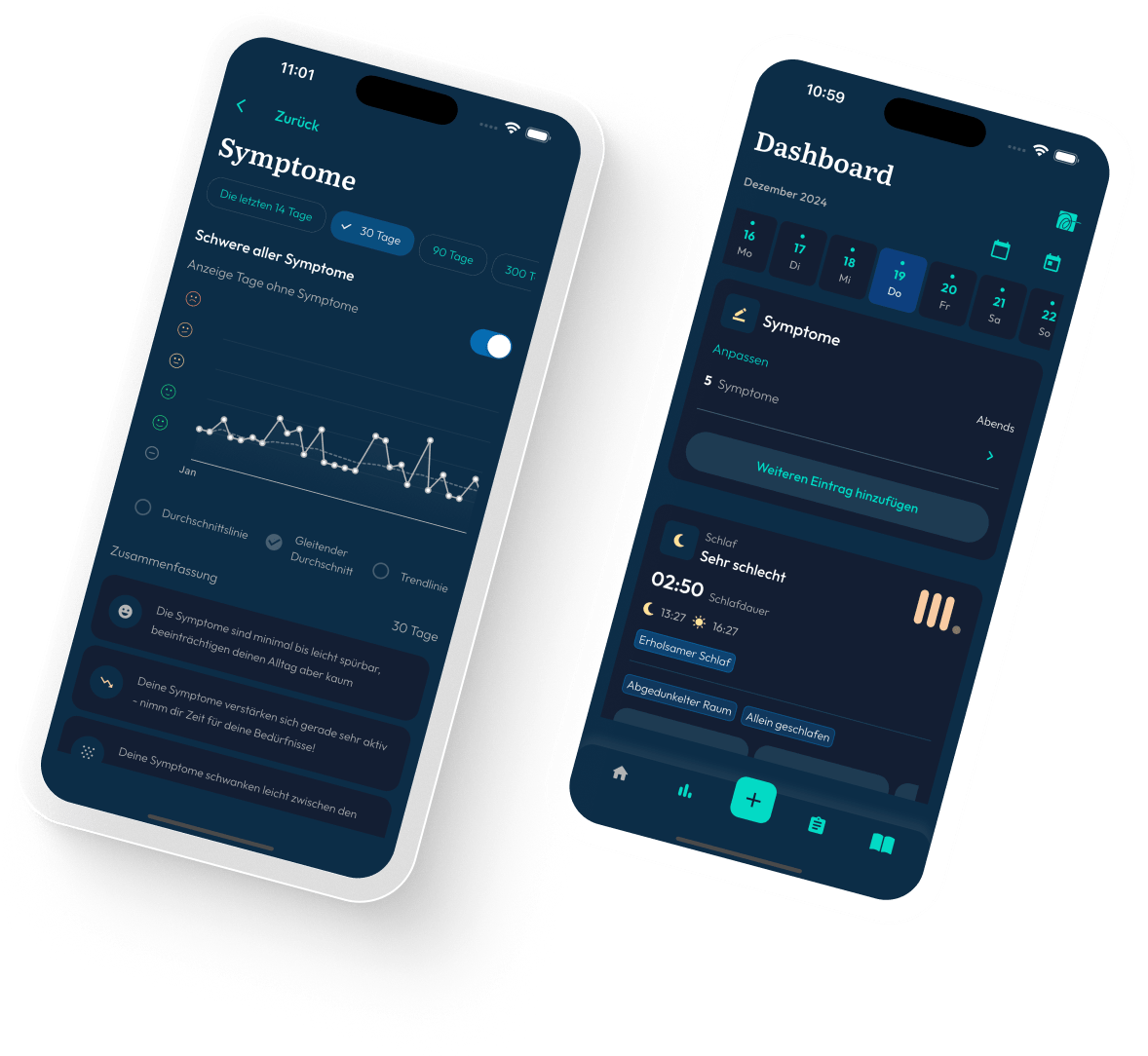
Document PEM patterns with the Elara app
Record symptoms, exertion, and recovery to better understand timing and recurring crash patterns in retrospect.
FAQ
Can PEM appear later than 72 hours?
The typical CDC description is worsening 12–48 hours after activity, but PEM timing varies and NICE describes delayed onset over hours or days. A recurring post-exertional pattern matters more than a fixed 72-hour boundary.
Does delayed onset mean the trigger was harmless?
No. Delayed onset is one reason people may wrongly assume an activity was fine when it actually contributed to later worsening.
How can I identify the trigger if several factors happened together?
That is where tracking across several days becomes useful. It helps reveal which combinations of activity, stress, poor sleep, or sensory load repeatedly precede symptom worsening.
Editorial standards
The linked guidelines and institutional resources explain the medical background. Editorial responsibility and any documented medical review are identified separately.
Medical background: 3 sources
Educational context – not a substitute for medical diagnosis
Links to related knowledge, questionnaires, and methodology
Guidelines and medical background
Related content
Early signs and warning signals
Which patterns often show up before the full worsening hits.
PEM vs. normal exhaustion
Why delayed onset makes PEM harder to recognize.
Questionnaires and tracking
How structured self-tracking helps reveal recurring patterns.
PEM hub
Related article from Elara Health.
What is post-exertional malaise?
Related article from Elara Health.
HRV and PEM: what wearables can show
Updated evidence on HRV, resting heart rate, and why these signals are not reliable stand-alone PEM predictors.
PEM, HRV and wearables
What heart rate and HRV can add to pacing context — and what they cannot predict.