
PEM vs. normal exhaustion
PEM is often confused with ordinary tiredness after exertion – the key differences in timing, severity, and recovery.
Short comparison
Ordinary exhaustion after activity is expected and usually improves with rest.
PEM is typically stronger, broader, and often delayed.
With PEM, several symptoms often worsen at once and recovery takes much longer.
In daily life, PEM can initially look like “I just did too much.” For affected people, however, the distinction matters because normal exertion logic can lead to repeated setbacks.
Core differences
PEM is disproportionate to the trigger.
Worsening may appear hours or days later.
It can affect cognition, sleep, pain, autonomic symptoms, and energy at the same time.
Normal post-activity recovery is usually shorter and more predictable.
Editorial responsibility
Elara Health
Patient-centered health information
Last updated
September 13, 2026
Self-tests and pacing tools
PEM and pacing become more actionable when symptom burden and function are captured in a structured way.
ME/CFS symptom check
Useful when delayed worsening after activity raises the question of ME/CFS-oriented symptom structure.
FUNCAP-27 questionnaire
Best when daily limitation, recovery instability, and functional burden should be documented.
Compare pacing apps
Find out which apps offer symptom tracking, wearable integration, and pacing support.
The response relative to the trigger
With ordinary exhaustion, the reason for feeling tired is usually clear: a demanding day, poor sleep, or a hard workout. The response may be unpleasant, but it makes sense.
With PEM, the deterioration often feels out of proportion to the trigger. Even moderate exertion can result in a marked setback.
Timing and symptom pattern
Ordinary tiredness usually appears right away or shortly after exertion and improves with sleep or a break.
PEM often has delayed onset. That delay is one reason people may think an activity was manageable, only to experience the real cost later.
Ordinary exhaustion: more immediate and shorter.
PEM: often delayed and disproportionate.
PEM recovery can last much longer than expected.
What this means in practice
If PEM is treated like ordinary fatigue, people often default to “push through now and recover later.” For many, that pattern increases instability.
A more useful approach is careful pacing and a focus on patterns across several days rather than relying only on momentary energy levels.
More context
More detail when you need it.
Medication and lab values can sit beside the rest of your history without crowding the pacing flow.
.png&w=1920&q=85)
.png&w=1920&q=85)
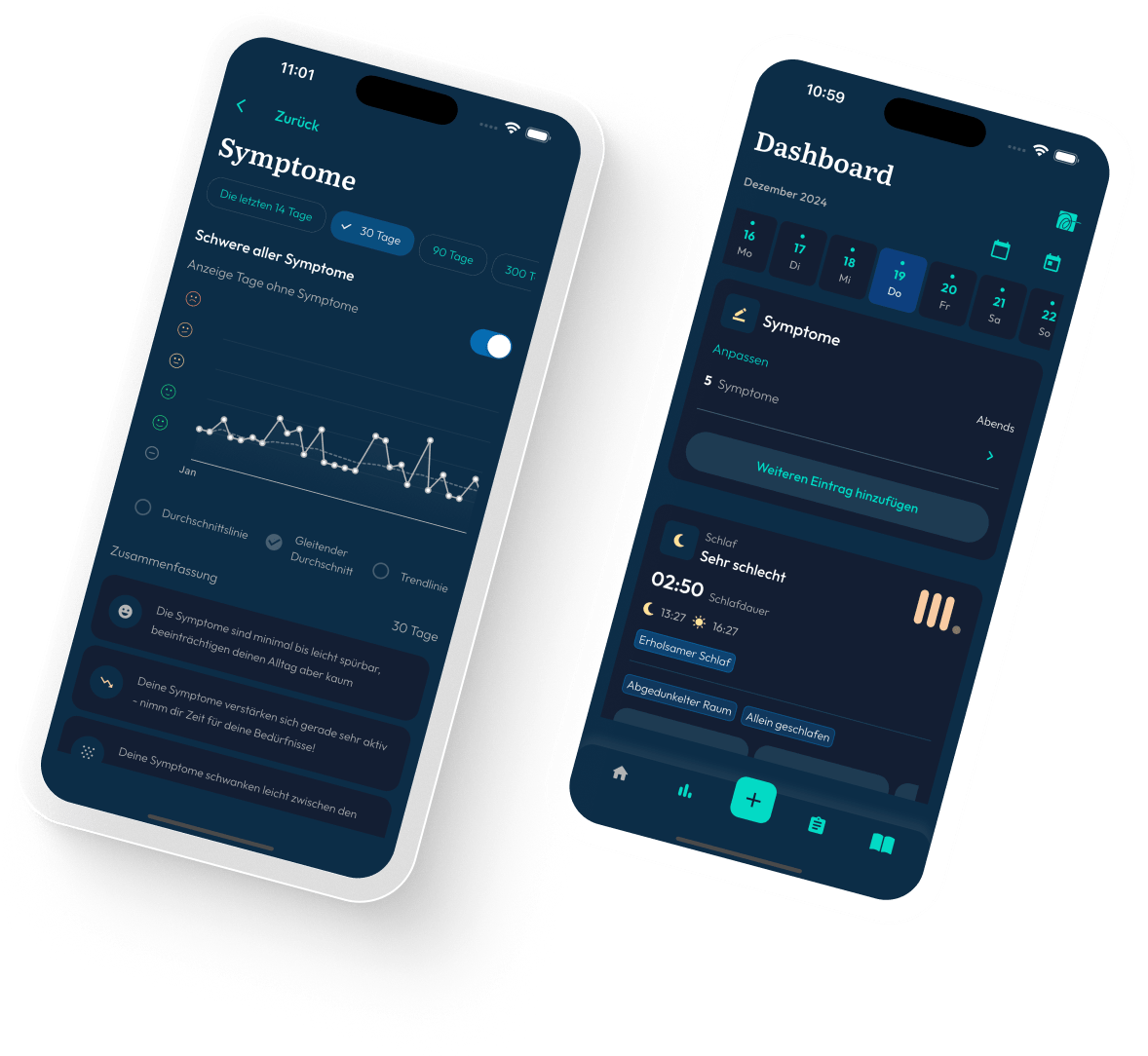
Document PEM patterns with the Elara app
Record symptoms, exertion, and recovery to better understand timing and recurring crash patterns in retrospect.
FAQ
Can I identify PEM just by how long recovery takes?
Longer, less predictable recovery is an important clue, but the overall pattern matters more: delayed onset, disproportionate worsening, and multiple affected symptoms.
Is PEM always dramatic and obvious?
No. PEM can build gradually. That is why structured tracking is often more reliable than a moment-to-moment impression alone.
Can people with PEM still have active days?
Yes. The issue is not that activity is impossible, but that tolerance is often narrower and less stable than others expect.
Editorial standards
The linked guidelines and institutional resources explain the medical background. Editorial responsibility and any documented medical review are identified separately.
Medical background: 2 sources
Educational context – not a substitute for medical diagnosis
Links to related knowledge, questionnaires, and methodology
Guidelines and medical background
Related content
PEM hub
All core PEM questions in one place.
What is PEM?
Definition and key features of post-exertional malaise.
Questionnaires and longitudinal tracking
How structured self-tracking makes patterns easier to see.
HRV and PEM: what wearables can show
Updated evidence on HRV, resting heart rate, and why these signals are not reliable stand-alone PEM predictors.