
Heart-rate pacing in ME/CFS
How heart rate can support pacing, where its limits are, and why numbers only become useful together with symptoms and recovery patterns.
Short answer
Heart rate can support pacing by making exertion and recovery more visible.
It does not replace symptom observation or an understanding of PEM, delay effects, and individual limits.
It becomes useful when it simplifies decisions rather than adding more pressure.
Many people hope heart-rate data will provide a clearer line for activity decisions. That can help, but only if heart rate is used as one supportive signal rather than a rigid rule.
Key points
heart rate is a signal, not a perfect boundary
cognitive and sensory load are not always captured well by heart rate alone
overly rigid number rules can make pacing harder
the biggest benefit usually comes when heart rate is combined with symptoms and course over time
Editorial responsibility
Elara Health
Patient-centered health information
Last updated
September 13, 2026
Self-tests and pacing tools
PEM and pacing become more actionable when symptom burden and function are captured in a structured way.
ME/CFS symptom check
Useful when delayed worsening after activity raises the question of ME/CFS-oriented symptom structure.
FUNCAP-27 questionnaire
Best when daily limitation, recovery instability, and functional burden should be documented.
Compare pacing apps
Find out which apps offer symptom tracking, wearable integration, and pacing support.
Why heart rate can help with pacing
Heart rate gives many people a more external sign that load is rising. That can be especially useful when limits are felt too late in the moment.
This is most helpful when physical activity, orthostatic load, or extended demanding situations are otherwise hard to judge in real time.
Where the limits are
Heart rate does not capture every form of load equally well. Cognitive overload, sensory strain, or emotional stress can shape the day strongly without always showing up clearly in a single number.
That is why heart rate works best as one layer of context, not as the only decision rule.
physical load is often easier to reflect than cognitive strain
stress, sleep, and day-to-day variability change interpretation
static thresholds do not always fit fluctuating courses
symptoms and recovery still matter
What pragmatic use looks like
A simple approach is usually better: read heart rate loosely together with activity, symptoms, and the following day instead of building a rigid system around it.
If the number helps you pause a little earlier or limits overuse on better days, it is already doing much of its job.
More context
More detail when you need it.
Medication and lab values can sit beside the rest of your history without crowding the pacing flow.
.png&w=1920&q=85)
.png&w=1920&q=85)
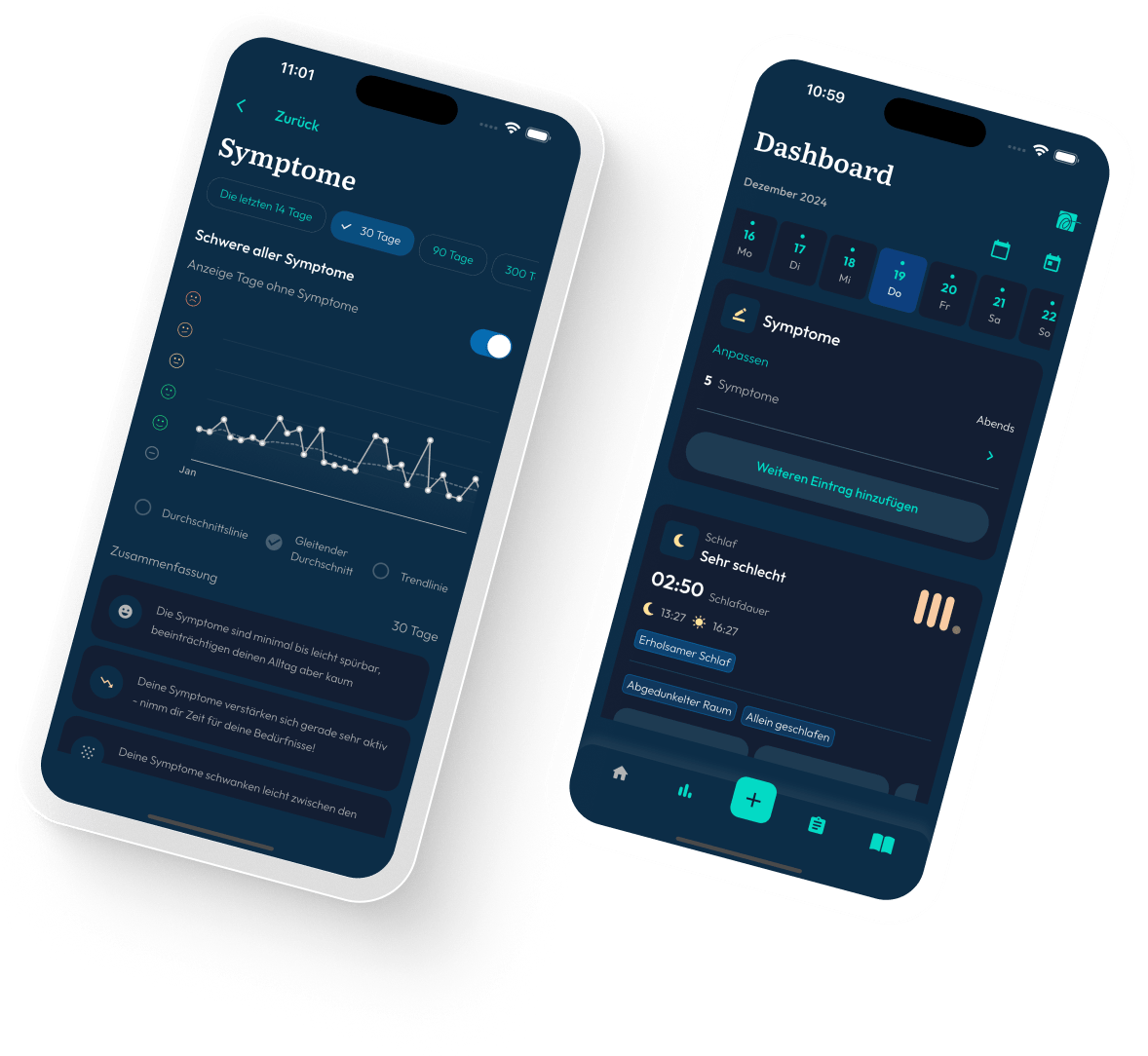
Put pacing into practice with the Elara app
Capture exertion, recovery, and personal signals in a pacing diary and put changes over time into context.
FAQ
Do I need a heart-rate device for good pacing?
No. Many people pace successfully without wearables. Heart rate can help, but it is an add-on rather than a requirement.
Should I follow one fixed heart-rate threshold strictly?
Usually not. Thresholds can offer orientation, but they still need to be read together with symptoms, daily variability, and longer-term course.
When does heart-rate tracking become more stressful than useful?
When it creates extra pressure, complicates daily life, or is treated as the only truth instead of a simplifying guide.
Should I use heart rate mainly in the moment or review it against the next day?
Both can help. In the moment, heart rate may support earlier pauses. Often the more important use is reviewing it together with symptoms and the following day, because PEM and overload are not always obvious right away.
Editorial standards
The linked guidelines and institutional resources explain the medical background. Editorial responsibility and any documented medical review are identified separately.
Medical background: 2 sources
Educational context – not a substitute for medical diagnosis
Links to related knowledge, questionnaires, and methodology
Guidelines and medical background
Related content
How tracking helps with pacing
How heart rate can fit into a lighter tracking system.
PEM early signs
Why numbers alone rarely capture the full warning pattern.
How to start pacing in daily life
Why it helps to simplify the system first and then add data.
How long does PEM last?
Related article from Elara Health.
HRV and PEM: what wearables can show
Updated evidence on HRV, resting heart rate, and why these signals are not reliable stand-alone PEM predictors.