
HbA1c and fatigue: when metabolic context becomes part of the question
When HbA1c may matter in fatigue and unstable energy – and why a metabolic marker does not explain every exhaustion pattern.
- Author
- Frederik MarquartFounder & CEO, Elara Health
- Editorial responsibility
- Elara HealthPatient-centered health information
- Last updated
- September 13, 2026
Short answer
HbA1c may be useful when there is a specific question about persistently elevated glucose or diabetes; fatigue alone does not make it a preferred fatigue marker.
A single HbA1c value, however, does not automatically explain brain fog, PEM, or clearly reduced capacity.
If complaints persist despite metabolic context or worsen after activity, interpretation usually needs to widen.
HbA1c often comes up in fatigue, but it is not a general test for “unstable energy”. For primarily unexplained fatigue, the German DEGAM guideline includes blood glucose in the basic work-up; HbA1c is used when there is a specific question about diabetes or longer-term glycaemia.
Key points
HbA1c reflects longer-term glycaemic exposure and is not a general marker of daily energy or fatigue.
Metabolic context can matter without explaining the whole complaint pattern.
Course, symptom timing, and day-to-day function remain central.
Unstable capacity needs to be assessed as a clinical problem independently of the HbA1c result.
Questionnaires that complement fatigue-related lab questions
When lab values alone do not explain the picture, structured symptom capture often adds the missing context.
Why HbA1c appears in fatigue questions
HbA1c is often searched when people suspect a glucose-related cause of fatigue or symptoms around meals. It does not measure short-term energy dips after individual meals.
That gives the marker a clear metabolic anchor in an otherwise blurry exhaustion pattern.
What HbA1c can contribute
HbA1c can help when there is a specific question about diabetes or longer-term glycaemia. It is not designed to explain acute meal-to-meal symptom fluctuations on its own.
Still, the value does not automatically describe how strongly exertion limits daily life or why symptoms worsen later after activity.
useful for specific questions about longer-term glycaemia or diabetes
not identical to the full exhaustion pattern
needs symptom and course context
When metabolism stops being the main question
If recovery remains poor, brain fog dominates, or activity leads to disproportionate worsening, metabolic logic often stops being enough.
At that point, exertion response, symptom course, and other clinical findings should be assessed independently of the HbA1c result.
More detail when you need it.
Medication and lab values can sit beside the rest of your history without crowding the pacing flow.
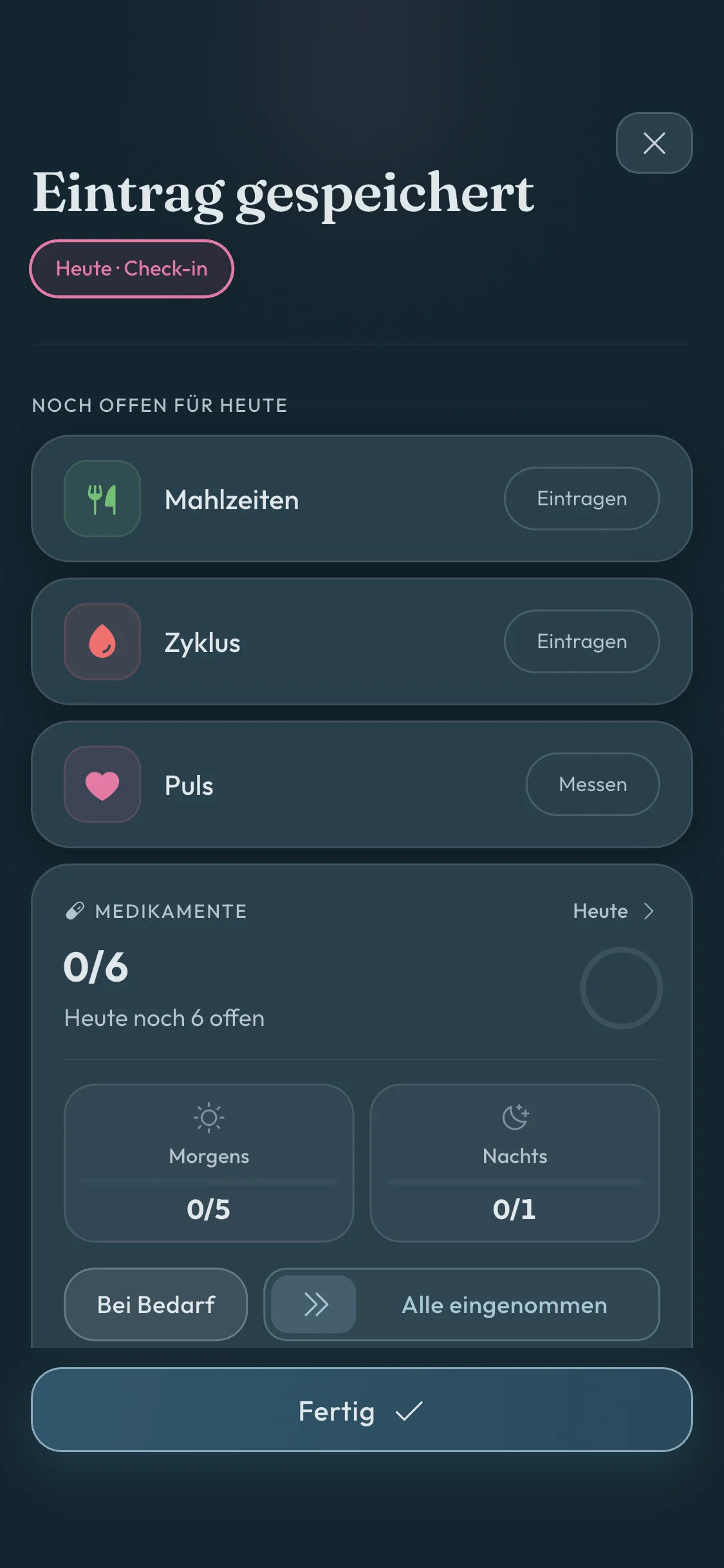
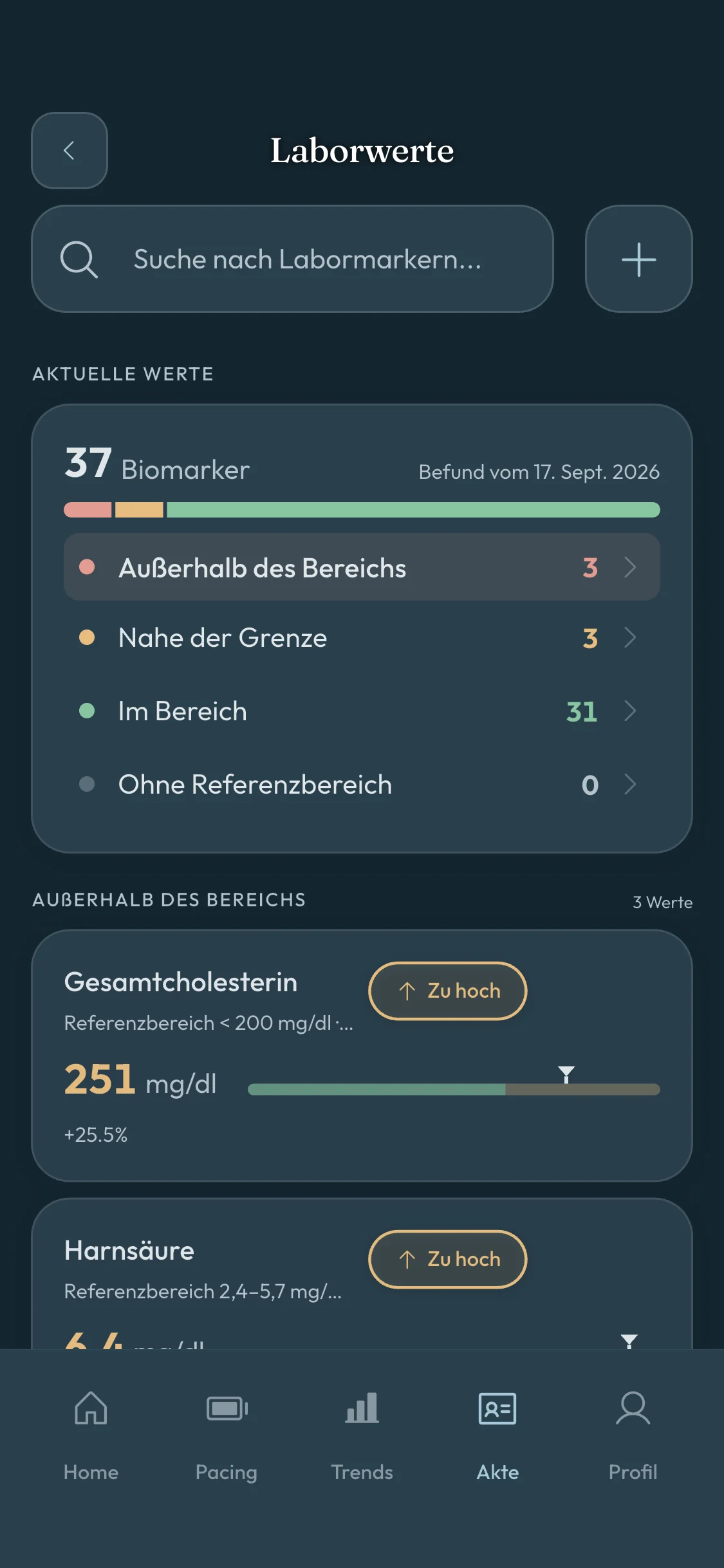
Elara App
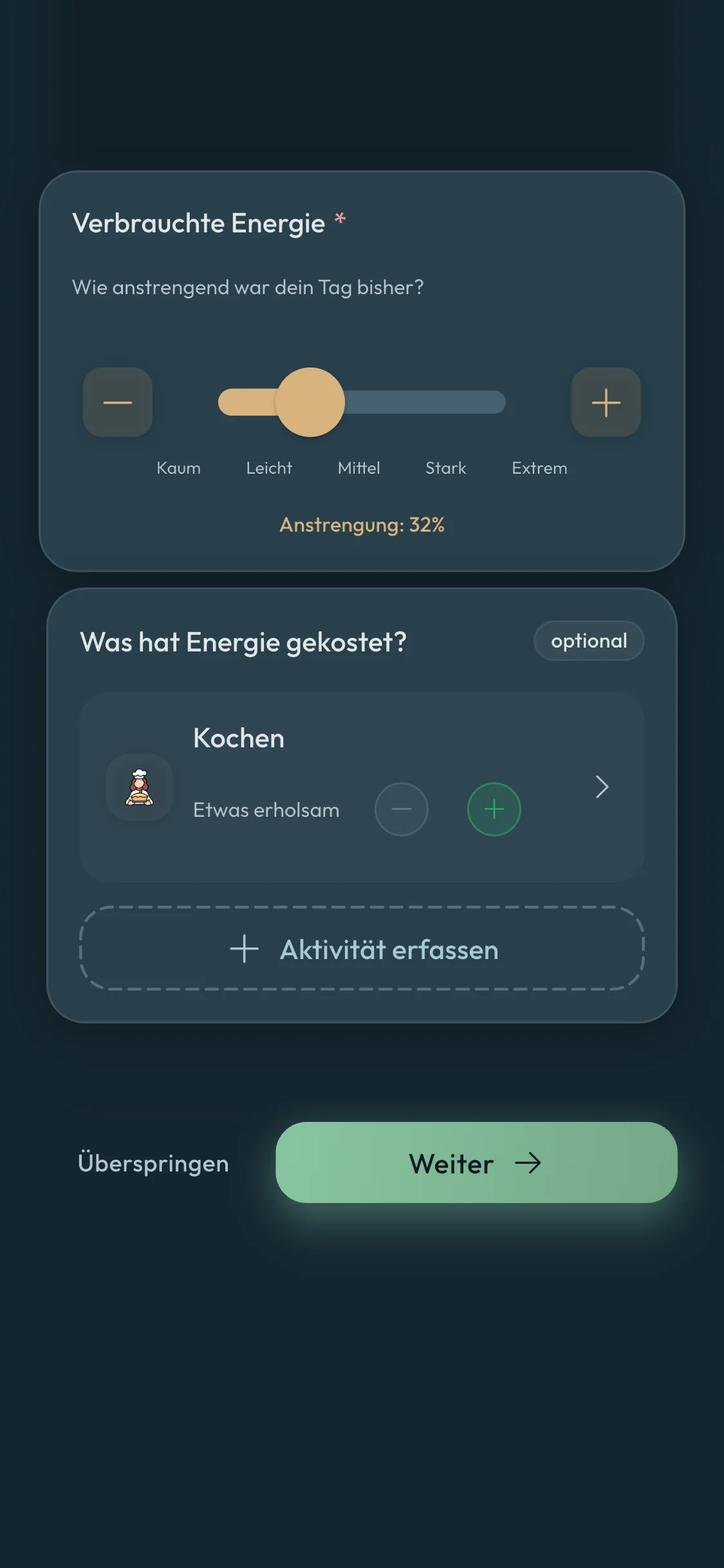
Make fatigue patterns visible
Document symptoms, energy, and possible triggers and see connections develop over time.
FAQ
Can HbA1c fully explain chronic fatigue?
Not automatically. HbA1c can provide metabolic context, but it usually does not fully explain complex, exertion-related, or multisystem complaints.
Why is HbA1c a common search term in unstable energy?
Because people with fatigue or symptoms around meals often suspect a glucose-related cause. HbA1c addresses longer-term glycaemia and does not measure acute “energy crashes”.
What if HbA1c is normal but the exhaustion remains?
Then further assessment should follow symptom course, associated features, and the clinical examination; a normal HbA1c result is not itself evidence for ME/CFS or PEM.
Guidelines and medical background
The linked guidelines and institutional resources explain the medical background. Editorial responsibility and any documented medical review are identified separately.
Editorial standards
- Medical background: 3 sources
- Educational context – not a substitute for medical diagnosis
- Links to related knowledge, questionnaires, and methodology