
ME/CFS symptoms and diagnostic criteria
Common ME/CFS symptoms include PEM, markedly reduced capacity, brain fog, and unrefreshing sleep. Diagnostic criteria help structure that pattern more clearly than vague symptom lists alone.
Short answer
Common symptoms of ME/CFS include PEM, markedly reduced exertion tolerance, brain fog, unrefreshing sleep, and often autonomic or pain-related symptoms.
Diagnostic criteria help organize recurring patterns more systematically.
For affected people, that can support clearer self-documentation and more focused conversations with professionals.
ME/CFS often presents as a combination of multiple symptom domains. Diagnostic criteria help structure these patterns, even though a website cannot provide a medical diagnosis. For self-tracking and clinical conversations, a structured questionnaire can make these patterns easier to document.
Common symptom domains
PEM
limited capacity
cognitive dysfunction or brain fog
unrefreshing sleep and other multisystem symptoms
Editorial responsibility
Elara Health
Patient-centered health information
Last updated
September 13, 2026
ME/CFS self-test and everyday support
Use questionnaires when explanation should turn into structured symptom capture, diagnostic orientation, or severity documentation.
ME/CFS symptom check
Best when the main question is whether the symptom pattern fits ME/CFS-oriented criteria.
FUNCAP-27 questionnaire
Use when function, daily limitation, and severity need clearer structure over time.
Compare pacing apps
Compare symptom diaries, wearable support, and costs to find a tool for your daily routine.
Why criteria matter at all
ME/CFS is often described too vaguely. Diagnostic criteria help bring common patterns together instead of treating symptoms as isolated fragments.
This matters because many symptoms can also occur in other illnesses. Their pattern and relationship add much more meaning than any single symptom alone.
Common symptom groups
Typical features include not only low energy and reduced tolerance, but especially PEM, concentration problems, unrefreshing sleep, pain, and autonomic issues such as orthostatic symptoms.
Which symptoms dominate can vary substantially between individuals.
PEM after exertion
marked or unstable capacity limits
brain fog and cognitive overload
sleep, pain, circulation, or sensory problems
How structured tracking can help
Even though a website does not replace diagnosis, structured self-tracking can make patterns easier to see.
When exertion, PEM, sleep, and cognitive symptoms become more visible together, course and severity are often easier to understand.
More context
More detail when you need it.
Medication and lab values can sit beside the rest of your history without crowding the pacing flow.
.png&w=1920&q=85)
.png&w=1920&q=85)
Structure daily life with ME/CFS
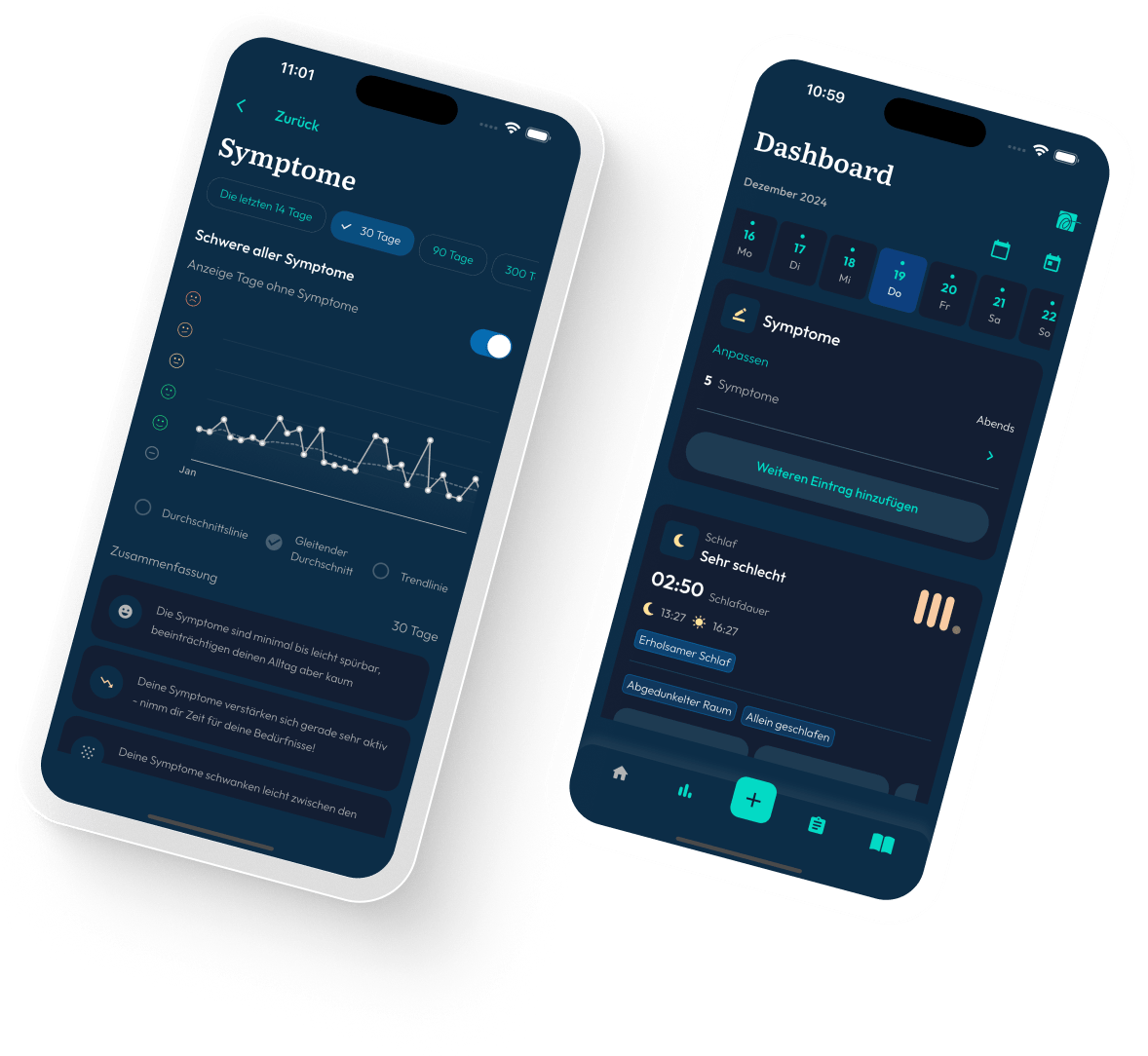
Record symptoms, exertion, and recovery to understand your trajectory – with the Elara app.
FAQ
Are criteria the same as a diagnosis?
No. Criteria support structured assessment, but they do not replace medical evaluation and differential diagnosis.
Does every affected person have exactly the same symptoms?
No. There are common patterns, but the weighting of individual symptoms can vary a lot.
Why is PEM so important in the criteria?
Because delayed and disproportionate worsening after exertion is one of the central differentiating features of ME/CFS.
Editorial standards
The linked guidelines and institutional resources explain the medical background. Editorial responsibility and any documented medical review are identified separately.
Medical background: 2 sources
Educational context – not a substitute for medical diagnosis
Links to related knowledge, questionnaires, and methodology
Guidelines and medical background
Related content
What is ME/CFS?
The core definition and framing of the illness.
ME/CFS symptom check
Document symptoms against core criteria in a structured way.
PEM hub
Why exertion response matters so much in assessment.
ME/CFS hub
Related article from Elara Health.
Questionnaires and self-tracking
Related article from Elara Health.