
ME/CFS vs. burnout or depression
Why ME/CFS should not be equated with burnout or depression, even though some symptoms may overlap.
Short answer
ME/CFS, burnout, and depression can overlap in some symptoms, but they are not the same.
PEM, delayed worsening after exertion, and the specific pattern of physical limitation point toward a different illness pattern in ME/CFS.
Clear differentiation matters because it affects daily life, exertion management, and medical assessment.
ME/CFS is still often psychologized or oversimplified. That harms affected people because central features such as PEM and the altered response to exertion disappear from view.
What to watch for
symptom overlap does not mean the same cause
PEM is central for differentiation
exertion response and recovery often look different in ME/CFS
misinterpretation can create harmful pressure to push through
Editorial responsibility
Elara Health
Patient-centered health information
Last updated
September 13, 2026
ME/CFS self-test and everyday support
Use questionnaires when explanation should turn into structured symptom capture, diagnostic orientation, or severity documentation.
ME/CFS symptom check
Best when the main question is whether the symptom pattern fits ME/CFS-oriented criteria.
FUNCAP-27 questionnaire
Use when function, daily limitation, and severity need clearer structure over time.
Compare pacing apps
Compare symptom diaries, wearable support, and costs to find a tool for your daily routine.
Why this confusion is so common
Because tiredness, exhaustion, concentration problems, or low drive can also appear in other conditions, ME/CFS is often placed too quickly into more familiar categories.
This superficial comparison misses how strongly exertion response, PEM, and physical instability can shape life in ME/CFS.
What feels different in ME/CFS
In ME/CFS, it is not only exhaustion that matters, but the delayed and disproportionate worsening after exertion. That pattern does not fit well with simple explanations based only on stress or motivation.
The combination of cognitive, sleep-related, autonomic, and physical symptoms also often creates a different overall picture.
Why false classification is a real problem
If ME/CFS is treated as simple exhaustion, burnout, or depression, there is often pressure to increase activity or ignore warning signs.
For many affected people, that can increase the risk of further setbacks.
More context
More detail when you need it.
Medication and lab values can sit beside the rest of your history without crowding the pacing flow.
.png&w=1920&q=85)
.png&w=1920&q=85)
Structure daily life with ME/CFS
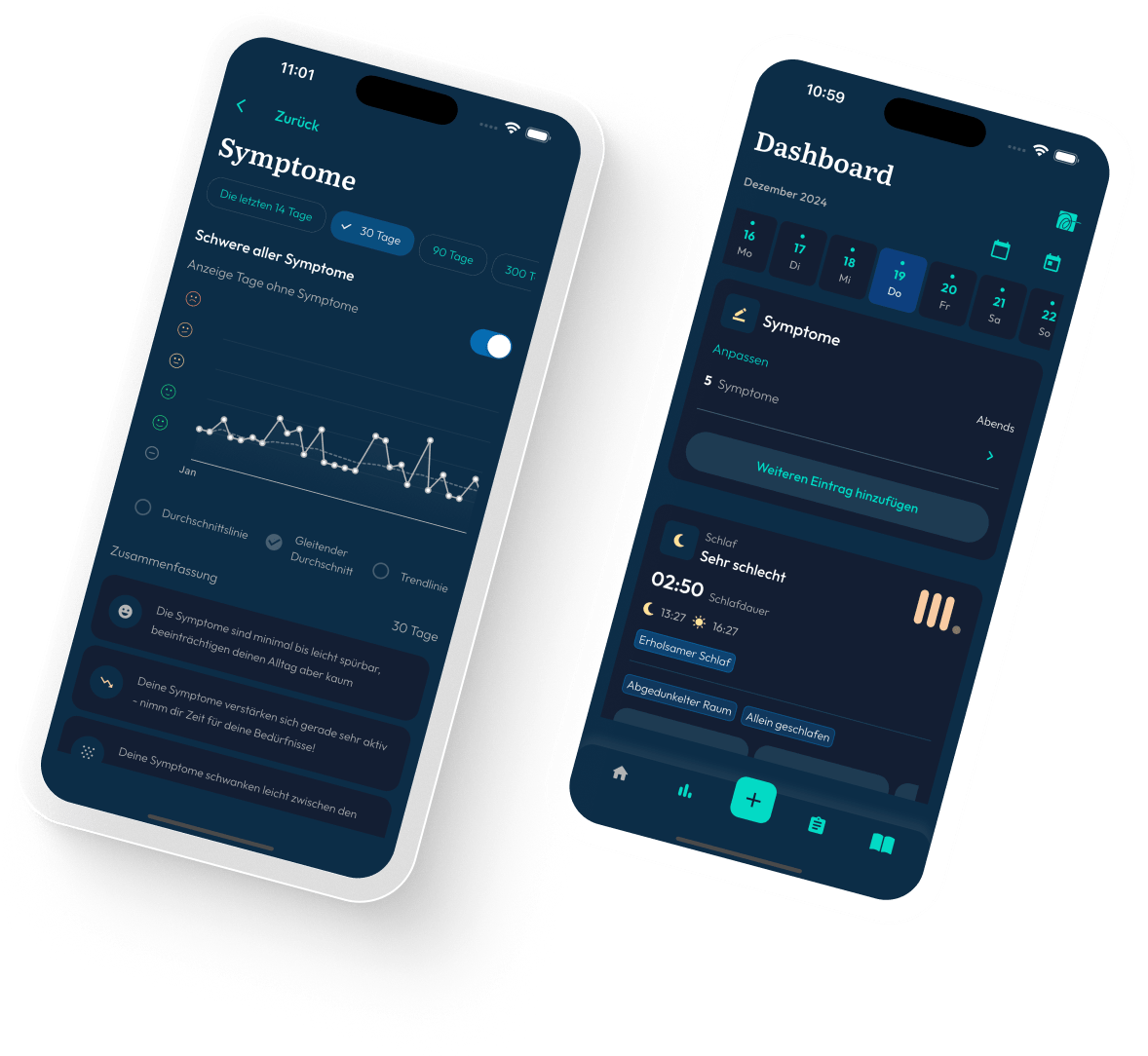
Record symptoms, exertion, and recovery to understand your trajectory – with the Elara app.
FAQ
Can someone have both ME/CFS and depression?
Yes, that is possible. Comorbidity does not change the need to assess ME/CFS as its own distinct pattern.
Is PEM the most important difference?
It is one of the most important clues because delayed and disproportionate worsening after exertion is highly characteristic.
Why does this matter in daily life?
Because unrealistic expectations around activity and pushing harder can cause significant worsening in ME/CFS.
Editorial standards
The linked guidelines and institutional resources explain the medical background. Editorial responsibility and any documented medical review are identified separately.
Medical background: 2 sources
Educational context – not a substitute for medical diagnosis
Links to related knowledge, questionnaires, and methodology
Guidelines and medical background
Related content
What is ME/CFS?
The core definition and framing.
Symptoms and diagnostic criteria
How common patterns can be examined more systematically.
PEM vs. normal exhaustion
Why exertion response matters so much in differentiation.
ME/CFS hub
Related article from Elara Health.
PEM hub
Related article from Elara Health.
Pacing hub
Related article from Elara Health.