
Common pacing mistakes
Pacing often fails not because the principle is wrong, but because of typical thinking and behavior patterns. The most common mistakes and how to correct them pragmatically.
Short answer
Common mistakes include overusing better days, leaving no buffer time, making the system too complex, and ignoring warning signs.
Pacing usually becomes more stable when rules get simpler, observation gets clearer, and expectations become more realistic.
The goal is not perfection, but better repeatability.
Many pacing problems arise not because pacing is flawed, but because it becomes too strict, too vague, or too ambitious in daily life.
Typical pitfalls
trying to catch up too much on better days
scheduling breaks but not actually taking them
tracking physical load while forgetting cognitive load
burdening daily life with too many rules
Editorial responsibility
Elara Health
Patient-centered health information
Last updated
September 13, 2026
Self-tests and pacing tools
PEM and pacing become more actionable when symptom burden and function are captured in a structured way.
ME/CFS symptom check
Useful when delayed worsening after activity raises the question of ME/CFS-oriented symptom structure.
FUNCAP-27 questionnaire
Best when daily limitation, recovery instability, and functional burden should be documented.
Compare pacing apps
Find out which apps offer symptom tracking, wearable integration, and pacing support.
Doing too much on better days
A classic mistake is using good days to catch up on everything at once. That reaction is understandable, but it often increases the cost of the following days.
Pacing becomes more robust when stronger days do not automatically trigger “now I have to get everything done.”
Too much system, not enough practicality
Some people build very complex pacing systems with lots of rules and metrics. The problem is not discipline, but the added cognitive load.
A system only helps if it can actually be sustained in real life.
Rationalizing warning signs
Early warning signs are often explained away as coincidence, stress, or “I just need to push through this one thing.” That is where the next overload often begins.
It is usually better to take warning signs seriously a bit earlier rather than too late.
More context
More detail when you need it.
Medication and lab values can sit beside the rest of your history without crowding the pacing flow.
.png&w=1920&q=85)
.png&w=1920&q=85)
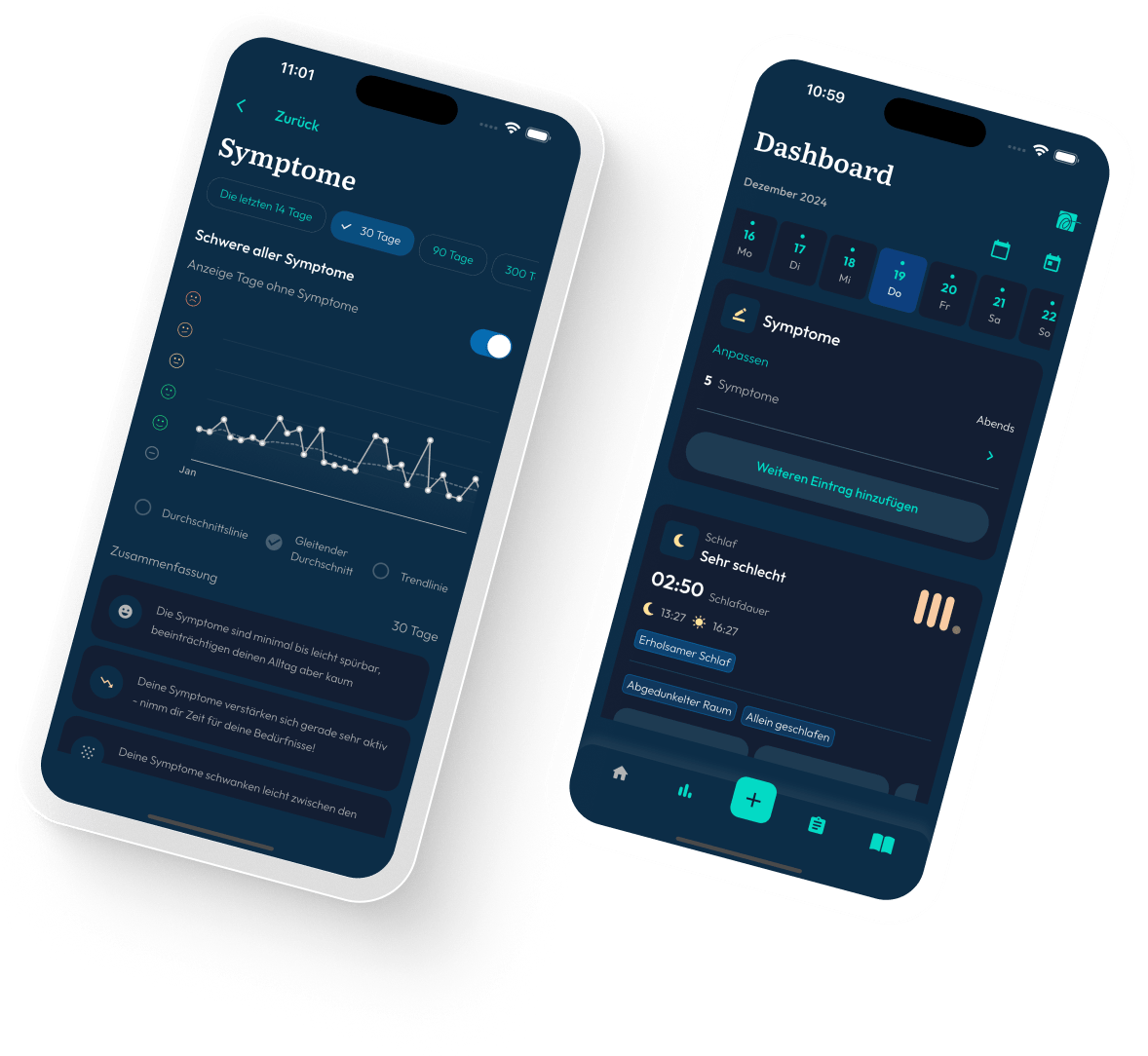
Put pacing into practice with the Elara app
Capture exertion, recovery, and personal signals in a pacing diary and put changes over time into context.
FAQ
Is it wrong to use good days at all?
No. The key issue is not whether a good day is used, but whether doing so destabilizes the following days. That longer view is central to pacing.
How do I know my pacing system is too complex?
If the system itself clearly costs energy, is hard to follow, or creates extra pressure, simplifying it is usually the right move.
Do I have to eliminate every mistake completely?
No. Pacing is a learning process. What matters is recognizing recurring patterns earlier and gradually reducing their impact.
Editorial standards
The linked guidelines and institutional resources explain the medical background. Editorial responsibility and any documented medical review are identified separately.
Medical background: 2 sources
Educational context – not a substitute for medical diagnosis
Links to related knowledge, questionnaires, and methodology
Guidelines and medical background
Related content
How tracking helps with pacing
How data can reveal mistakes earlier.
Pacing in ME/CFS
Why pacing is more than simple rest.
How delayed can PEM be?
Why misjudgments often show up only later.
Pacing hub
Related article from Elara Health.
How to start pacing in daily life
Related article from Elara Health.
PEM early signs
Related article from Elara Health.